
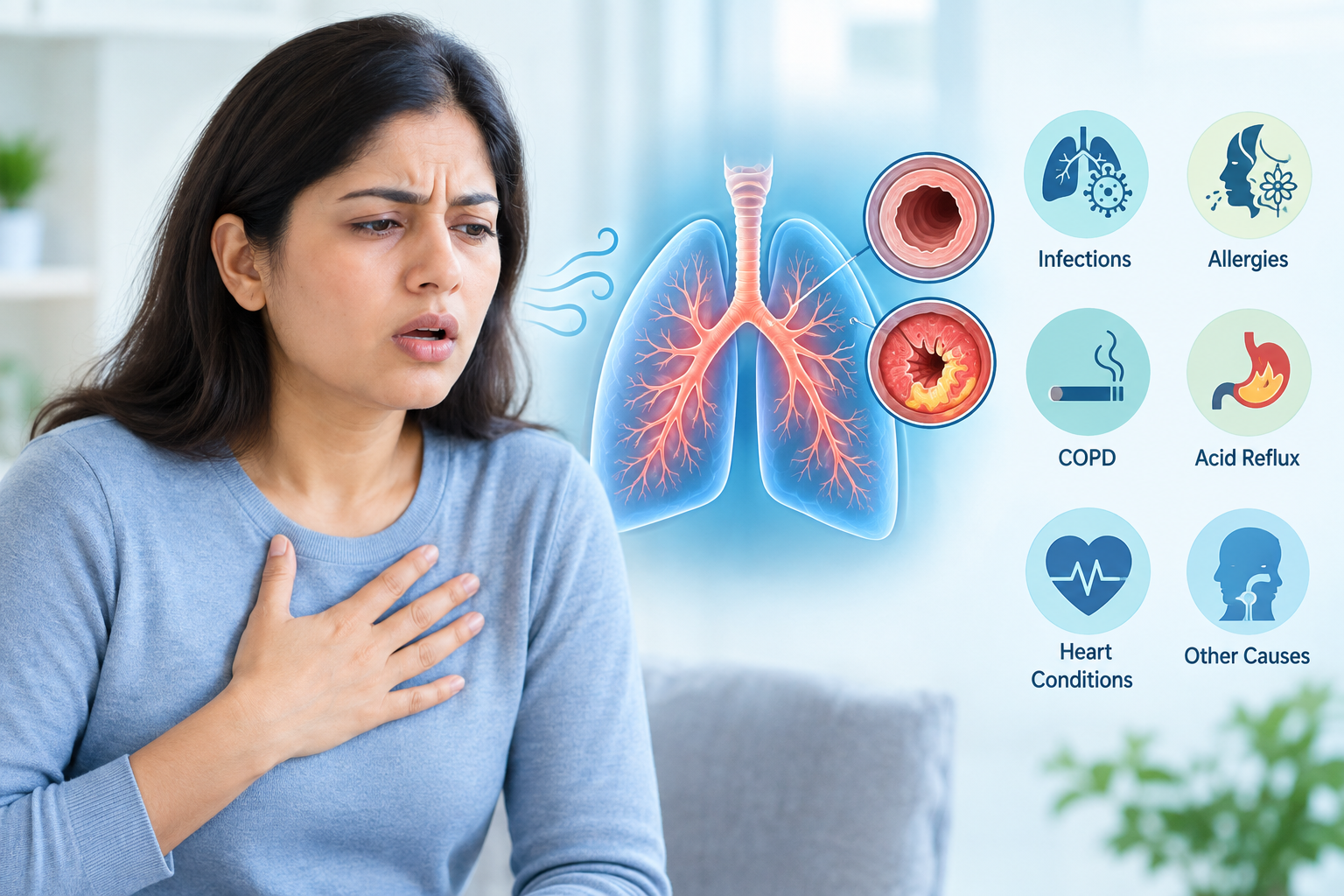
Wheezing Without Asthma: Causes, Diagnosis and Treatment Options
That whistling sound in your chest can be genuinely frightening. Most people hear it and jump to one conclusion: it must be asthma. But here’s something many patients don’t expect. Wheezing without asthma is very common.
Wheezing isn’t a disease in itself. It’s a signal that your airways have narrowed or become blocked somewhere, and the reason can be an infection, an allergy, acid reflux, a long-term lung condition, or even a problem with the heart. If you guess wrong and keep using an inhaler that was never meant for your problem, the real cause can go unnoticed for months.
This guide walks you through what wheezing is, what can cause it, how doctors work out the reason, and how it’s treated. If you’ve been dealing with a cough, chest tightness or trouble catching your breath, it should help you decide what to ask and when not to wait.
What Is Wheezing?
Picture air squeezing through a narrow tube. It whistles. Wheezing is the same thing happening inside your chest: a high-pitched, musical sound that comes from airways that have become tight, swollen or partly blocked. You usually hear it when you breathe out, though it can happen when you breathe in too. Sometimes you can hear it yourself. Other times only a doctor with a stethoscope can pick it up.
The narrowing can come from swollen airway lining, extra mucus, tight muscles around the airways, or something pressing on or sitting inside the airway.
One distinction is worth knowing: stridor. It’s a harsher sound, usually heard when breathing in, and it points to a problem higher up, such as the voice box or windpipe. Stridor needs urgent medical attention.
What Causes Wheezing Without Asthma?
Asthma gets most of the blame, but it’s far from the only suspect. These are the causes of wheezing that doctors think about most often:
- A chest infection. Bronchitis, pneumonia or even a heavy viral cold can inflame your airways and fill them with mucus. The wheeze often hangs around for a few weeks after you start feeling better, which surprises a lot of people.
- COPD. If you’ve smoked for years, or spent a long time around cooking smoke, dust or heavy pollution, your airways and lungs may be damaged. COPD usually brings a daily cough, phlegm and breathlessness that creeps up slowly, with wheezing alongside.
- Allergies. Dust mites, pollen, mould and pet dander can all make airways swell. A severe allergic reaction is different and urgent: sudden wheezing with a swollen face, lips or throat needs emergency care.
- Acid reflux (GERD). When stomach acid creeps upward, it can irritate the throat and airways, and tiny amounts may even be breathed in. Some people get a nagging cough and chest wheezing from reflux without ever feeling heartburn.
- Something inhaled. A piece of food, a nut or a small object can lodge in an airway. The wheeze usually starts suddenly after a choking or coughing fit and is often on one side of the chest. It’s more common in children, but adults aren’t exempt.
- Vocal cord dysfunction. Here the vocal cords close when they should open. People feel throat tightness and noisy breathing, mostly on the way in. It’s often mistaken for asthma, and the usual inhalers don’t help much.
- Heart problems. When the heart isn’t pumping well, fluid can back up into the lungs. Doctors sometimes call this cardiac asthma. Clues include breathlessness when lying flat, swollen ankles and unusual tiredness.
- Other causes. Bronchiectasis (damaged, widened airways), a blood clot in the lung, a growth pressing on an airway, smoke and fume exposure, and certain medicines can also trigger wheezing.
It’s also possible that someone does have asthma that simply hasn’t been diagnosed yet. That’s why a proper check-up beats guesswork.
Wheezing Causes: The Bigger Picture
When doctors look at the common wheezing causes, they tend to sort them into three groups. Some problems sit inside the airways, like infection, allergy, COPD or an inhaled object. Some irritate or press on the airways from nearby, like reflux, a growth or the vocal cords. And some start somewhere else, such as the heart or a clot in the lung, and spill over into your breathing. Working out which group you fall into decides which tests and treatment come next.
Common Wheezing Symptoms
Wheezing rarely arrives alone. Along with the whistling sound, people often notice:
- A cough, either dry or with phlegm
- A tight or heavy feeling in the chest
- Shortness of breath, especially when walking fast, climbing stairs or lying down
- Noisy breathing that disturbs sleep
- Feeling tired because breathing takes more effort
Other clues hint at the cause. Fever and coloured phlegm may suggest infection. Heartburn or a sour taste may suggest reflux. Sneezing and itchy eyes point to allergy. Swollen ankles can point towards the heart.
Asthma Symptoms vs. Wheezing Without Asthma
The typical asthma symptoms are wheezing, a cough that’s worse at night or early in the morning, chest tightness, and breathlessness that comes and goes, often set off by exercise, cold air, dust or allergens. The trouble is that many other conditions look very similar, so a whistling chest alone can’t confirm asthma.
A few things make doctors look beyond asthma: a long smoking history or years of daily phlegm, heartburn, wheezing that began suddenly after choking, noisy breathing mainly when breathing in, swollen ankles, or wheezing that doesn’t improve with the inhaler you’ve been given.
Wheezing While Breathing: When Should You Be Concerned?
A mild wheeze during a cold may settle on its own. But wheezing while breathing deserves a doctor’s attention when it:
- Is new, and you’re an adult who has never wheezed before
- Lasts more than a couple of weeks or keeps coming back
- Is getting worse or waking you up at night
- Comes with fever, weight loss, night sweats or blood in your phlegm
- Started suddenly after choking or inhaling something
- Stops you from walking, climbing stairs or doing everyday tasks
Please don’t treat it with leftover inhalers or cough syrups from an old prescription. They can hide the problem and delay the right diagnosis.
Chest Wheezing: What It Can Tell Your Doctor
Chest wheezing is simply wheezing that comes from the lungs and airways themselves. Where and when you notice it gives useful clues. A wheeze on both sides, especially with cough and phlegm, often points to a general airway problem such as infection, COPD or asthma. A wheeze that seems to sit in one spot may suggest a blockage in one airway. It also helps to notice whether it’s worse at night, after meals or when you lie down, and to mention that at your appointment.
Shortness of Breath and Wheezing: Possible Causes
When shortness of breath and wheezing show up together, doctors think about the airways, the lungs and the heart. The possibilities include COPD, a chest infection like pneumonia, heart failure, a blood clot in the lung, bronchiectasis and, of course, asthma.
The pattern matters. Breathlessness that has crept up over months in a long-term smoker raises different questions than sudden breathlessness with chest pain or a swollen leg. Telling your doctor when it started, what makes it better or worse, and what else you’ve noticed makes their job much easier.
Breathing Problems You Shouldn’t Brush Off
A lot of people live with breathing problems for far too long, blaming age, weight or being out of shape. If stairs feel harder than they did a year ago, or you wake at night short of breath, that’s worth getting checked, even if it feels minor.
Difficulty Breathing: When It’s an Emergency
Severe difficulty breathing, especially if it comes on suddenly or with chest pain, fainting or bluish lips, needs emergency care right away. Don’t wait to see if it passes.
Wheezing and Coughing: What It May Mean
Wheezing and coughing together are extremely common, and what they mean depends a lot on how long they’ve lasted.
- A few days to a few weeks: most often a viral or bacterial chest infection or an allergy flare-up.
- More than about eight weeks: the list widens to COPD, reflux, allergy-related airway inflammation, post-nasal drip, bronchiectasis and asthma-type conditions.
A cough that brings up coloured phlegm, or one that’s worse at night or after meals, gives extra hints. Any cough with blood, or one that lingers along with weight loss, should be checked promptly.
How Is Wheezing Diagnosed?
The aim isn’t just to confirm that you’re wheezing. It’s to find out why. A doctor will usually start with two things:
- Your story: when it began, what triggers it, whether you smoke or work around dust or fumes, any allergies, reflux symptoms, medicines you take, past chest illnesses and family history.
- A physical exam: listening to your chest, checking your oxygen level with a small finger clip, and looking for signs like swollen legs.
After that, depending on what the doctor finds, further tests may be suggested when clinically indicated:
- Spirometry: a simple breathing test that measures how much air you can blow out and how fast. It may be repeated after an inhaled medicine to see how your airways respond.
- Chest X-ray or CT scan: to look for infection, fluid, structural changes, growths or a foreign object.
- Blood tests: to check for infection, allergy-related markers or other contributing conditions.
- Heart tests: such as an ECG or echocardiogram if the heart might be involved.
- Allergy testing: to identify your triggers.
- Laryngoscopy: a look at the vocal cords if vocal cord dysfunction is suspected.
- Bronchoscopy: a procedure that lets the doctor see inside the airways, used in selected cases such as a suspected foreign object or blockage.
- Reflux assessment: if your symptoms suggest acid reflux is playing a part.
Not everyone needs every test. Your doctor will choose what fits your symptoms.
Wheezing Treatment Options
There’s no single wheezing treatment, because wheezing is a sign and not a disease. It doesn’t always mean asthma, so the right treatment depends on what’s causing it. Depending on the diagnosis, your doctor may recommend:
- Prescribed inhalers: some relax the muscles around the airways, while others calm inflammation. The type, dose and technique should come from your doctor.
- Infection-specific treatment: antibiotics only when a bacterial infection is suspected. Many viral infections get better with rest, fluids and symptom relief.
- Allergy management: avoiding known triggers, plus antihistamines or nasal sprays when prescribed.
- Reflux control: changes to meals and lifestyle, and acid-reducing medicines when needed.
- Removing a foreign object: usually done through a bronchoscopy under medical supervision.
- Vocal cord dysfunction: breathing and speech therapy techniques, along with managing triggers like reflux or allergy.
- Heart-related wheezing: treating the heart condition itself, usually together with a cardiologist.
- Supportive steps: quitting smoking, cutting down exposure to dust and pollution, staying up to date with recommended vaccines, and pulmonary rehabilitation for some people with long-term lung disease.
Please don’t start, stop or change prescription medicines on your own. Everyone responds a little differently.
Benefits of Timely Wheezing Treatment
Getting help early and treating the real cause can make a genuine difference, though no one can guarantee a particular result. The benefits of wheezing treatment may include:
- Finding the actual cause instead of guessing
- Relief from cough, chest tightness and breathlessness
- Better sleep and an easier time with daily activities
- A lower chance of flare-ups and complications in long-term conditions
- Not taking medicines that don’t suit your diagnosis
- Catching serious conditions early, when specialist care can do the most
Asthma Treatment Benefits, When Asthma Is the Cause
Sometimes testing does show asthma. In that case, the asthma treatment benefits for many people include better symptom control, fewer flare-ups and less disruption to sleep and daily life, as long as the plan is followed regularly and reviewed with the doctor.
When to Seek Medical Attention
Go to an emergency department or call emergency services right away if you have:
- Severe difficulty breathing, or you can’t speak in full sentences
- Blue or grey lips or face
- Wheezing with swelling of the lips, tongue or throat after an allergen, sting or medicine
- Chest pain, fainting or a racing heartbeat with breathlessness
- Sudden wheezing after choking on food or an object
Book a consultation soon if you have:
- Wheezing that lasts more than a couple of weeks or keeps returning
- Wheezing with a long-lasting cough, night-time symptoms or less stamina than before
- Wheezing with fever, weight loss or blood in your phlegm
- Wheezing that isn’t improving with the medicines you’ve been using
Frequently Asked Questions
1. Can you have wheezing without asthma?
Yes. Wheezing can result from infections, COPD, allergies, acid reflux, a foreign object in the airway, vocal cord dysfunction, heart conditions and other causes. A proper evaluation is needed to know whether asthma is involved at all.
2. What causes wheezing?
Wheezing happens when airways narrow or get partly blocked. The usual reasons are swelling from infection or allergy, extra mucus, airway damage in COPD, irritation from reflux, something stuck in the airway, or fluid in the lungs from a heart problem.
3. Is wheezing while breathing always serious?
Not always. A light wheeze during a cold can settle by itself. But wheezing that is new in an adult, long-lasting, getting worse, or accompanied by chest pain, fever, weight loss or severe breathlessness should be checked by a doctor.
4. Why do I have shortness of breath and wheezing together?
They often appear together when the airways are narrowed, as in COPD, asthma or infection. They can also be linked to heart or lung problems such as heart failure or a clot in the lung. Your doctor can tell these apart with an examination and tests.
5. What does wheezing and coughing at night mean?
Night-time wheezing and coughing can be linked to allergies, reflux, post-nasal drip, COPD, fluid build-up from a heart condition, or asthma. Because the causes differ, it’s best to have the pattern checked rather than assume one explanation.
6. Can acid reflux cause chest wheezing?
It can. Reflux may irritate the airways or let small amounts of stomach contents get breathed in, which can set off cough and wheeze. It’s one of several possible contributors, so doctors usually look at it alongside other causes.
7. What is the best wheezing treatment?
There’s no one best treatment. It depends on the cause, whether that’s an airway condition that responds to inhalers, an infection, an allergy, reflux or something else. Your doctor will tailor the plan once the diagnosis is clear.
8. How do doctors check difficulty breathing and wheezing?
Usually they begin with your history and a chest examination. From there they may suggest spirometry, a chest X-ray or CT scan, blood tests and, when needed, heart tests, laryngoscopy or bronchoscopy.
Conclusion
Wheezing without asthma is far more common than most people realise. The cause can be as simple as a lingering chest infection or as involved as a long-term lung or heart condition. Since wheezing is only a symptom, the most useful step is finding out what’s driving it. The right treatment follows from there.
