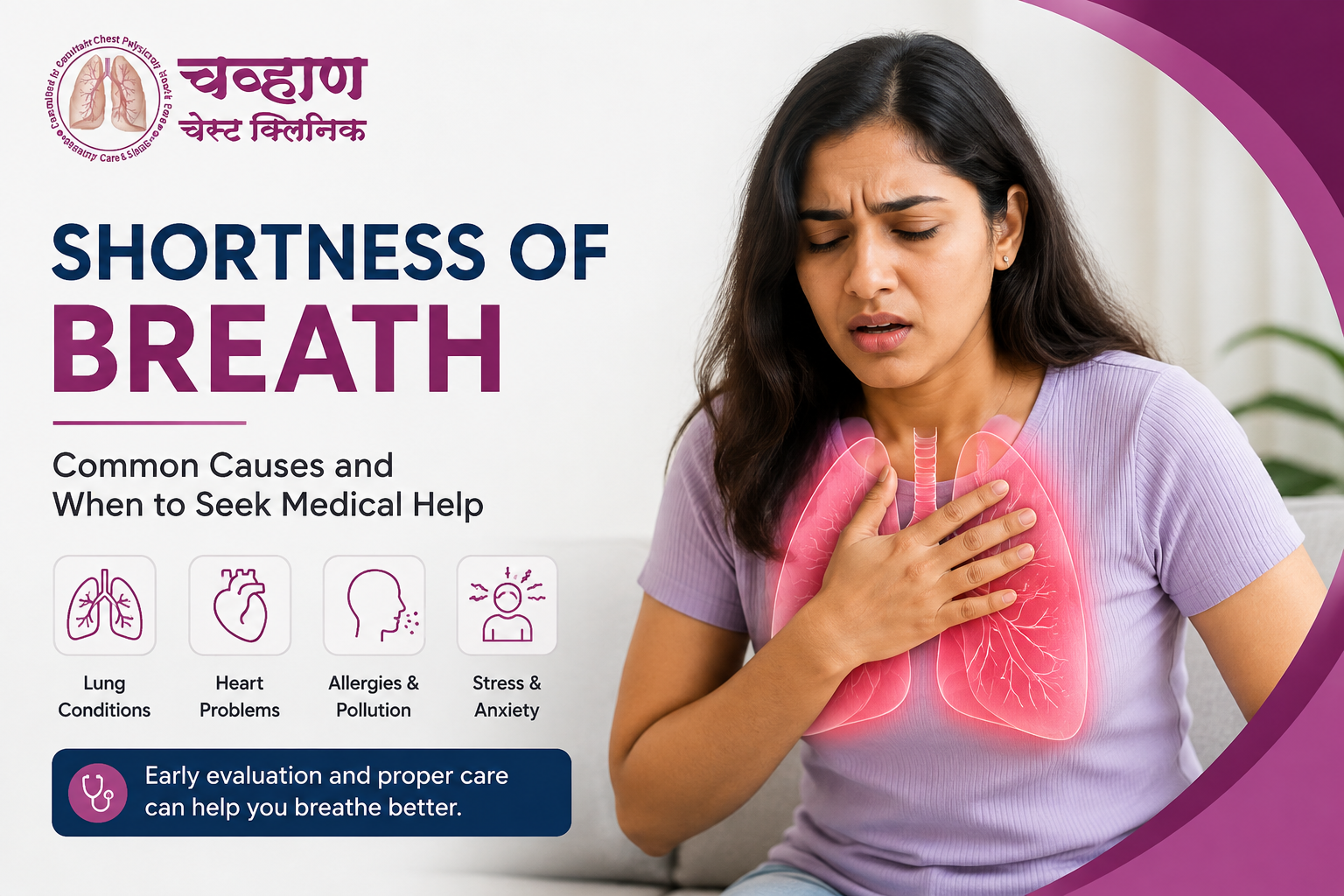
Shortness of Breath: Common Causes and When to Seek Medical Help
Shortness of breath, also called breathlessness or dyspnea, is something most people run into at some point, whether during exercise, while walking, climbing stairs, or even at rest. Getting winded after intense activity is normal enough, but breathing difficulty that’s persistent or unexplained isn’t something to brush off. Shortness of breath causes range from temporary, harmless triggers to underlying lung and heart problems that need medical attention.
Conditions like asthma, Chronic Obstructive Pulmonary Disease (COPD), pneumonia, lung infections, and sleep apnea can all cause breathing trouble. If symptoms stick around or get worse, seeing a Pulmonologist or Chest Physician helps identify what’s actually going on and what to do about it.
What Is Shortness of Breath?
It’s the feeling of not getting enough air, or of breathing not working the way it should. Some people notice chest tightness, rapid breathing, wheezing, or a sense of pressure in the chest.
Breathlessness can hit suddenly or build up gradually, during activity or while resting. Knowing the shortness of breath symptoms and what might be causing them helps people get to a doctor sooner rather than later.
Common Shortness of Breath Causes
There are several possible causes of shortness of breath, and figuring out which one applies matters for getting the right treatment.
Asthma
Asthma inflames and narrows the airways, leading to wheezing, coughing, chest tightness, and difficulty breathing. Allergies, pollution, smoke, exercise, and infections can all trigger a flare-up. A Pulmonologist can work out the right asthma treatment and help patients keep symptoms in check.
COPD
COPD is a long-term condition that restricts airflow. People with it often deal with a chronic cough, mucus, wheezing, and breathlessness, particularly during physical activity. The right COPD treatment helps manage symptoms and keeps quality of life up.
Pneumonia and Lung Infections
Pneumonia and other lung infections can bring on shortness of breath along with cough, fever, weakness, and chest discomfort. Some clear up with routine care, but severe or recurring infections call for evaluation by a Lung Specialist.
Sleep Apnea
In sleep apnea, breathing repeatedly stops and starts during sleep. Loud snoring, disturbed sleep, daytime tiredness, and breathing trouble at night are common signs. A Pulmonologist can evaluate this and recommend the right treatment.
Heart-Related Conditions
Not every breathing problem starts in the lungs. Some heart conditions cause breathlessness too, particularly during activity or while lying down, which is exactly why persistent shortness of breath shouldn’t be self-diagnosed.
Allergies, Pollution, and Anxiety
Dust, smoke, allergens, and air pollution irritate the respiratory system and can trigger breathing trouble. Anxiety and panic attacks can also bring on a feeling of breathlessness, though medical causes should be ruled out first before pinning it on stress alone.
When to Seek Medical Help for Shortness of Breath?
Knowing when to seek medical help for shortness of breath matters. A doctor should look into breathlessness that’s persistent, recurring, unexplained, or getting in the way of daily life.
It’s worth getting checked if you notice:
- Persistent shortness of breath
- Difficulty breathing during normal activities
- Frequent wheezing
- Chronic cough
- Chest tightness
- Recurrent lung infections
- Breathlessness while lying down
- Increasing breathing difficulties
- Long-term mucus production
Sudden or severe difficulty breathing, chest pain, bluish lips or fingers, confusion, dizziness, or coughing up blood need immediate medical attention.
How Are Breathing Problems Diagnosed?
A Pulmonologist in Navi Mumbai or other qualified Chest Specialist usually starts with a detailed medical history and physical exam, asking about symptoms, smoking exposure, allergies, past infections, occupational exposure, and existing health conditions.
From there, respiratory tests are ordered depending on what’s suspected.
Pulmonary Function Test (PFT)
A Pulmonary Function Test, often just called a PFT test, checks how well the lungs are working by measuring airflow and lung capacity, useful for identifying conditions like asthma and COPD.
Spirometry
Spirometry is a common lung function test that measures how much air you can inhale and exhale, and how fast it comes out.
Chest X-Ray
A chest X-ray helps spot infections, inflammation, structural changes, and other abnormalities in the lungs.
CT Scan
A CT scan for lungs gives a more detailed picture than a standard X-ray, useful when the doctor needs a closer look at lung structures.
Bronchoscopy
Bronchoscopy lets a pulmonologist examine the airways directly with a thin, flexible instrument, used in select cases to investigate specific conditions.
Blood tests, sputum examination, allergy testing, or sleep studies may also come in depending on what’s suspected.
Shortness of Breath Treatment
The right shortness of breath treatment comes down to the underlying cause. There’s no one-size-fits-all approach here.
Depending on the diagnosis, breathlessness treatment or breathing problem treatment can include prescribed medications, inhalers, infection management, allergy control, pulmonary rehabilitation, lifestyle changes, smoking cessation support, or oxygen therapy in select cases.
Asthma often needs long-term asthma treatment, while COPD may call for regular medication, inhaler therapy, pulmonary rehabilitation, and ongoing monitoring. Treatment for other lung diseases and respiratory disorders is similarly built around individual symptoms and diagnosis.
When Should You Consult a Pulmonologist?
A Pulmonologist, also known as a Chest Physician, Lung Specialist, or Respiratory Specialist, focuses on diagnosing and treating conditions of the respiratory system.
Anyone dealing with ongoing breathing problems, a chronic cough, recurring lung infections, wheezing, or unexplained breathlessness stands to benefit from a specialist’s evaluation.
If you’re searching for a Pulmonologist near me, Best Pulmonologist near me in Navi Mumbai, or a Pulmonologist in Navi Mumbai, it helps to look at the doctor’s qualifications, experience, areas of specialisation, diagnostic facilities, and approach to patient care before deciding.
Respiratory Care by Dr. Vinod Chavhan
Dr. Vinod Chavhan provides diagnosis and personalised treatment for a range of respiratory disorders and lung conditions. Patients dealing with persistent breathing difficulties can get a proper evaluation to understand what’s causing their symptoms.
Diagnostic approaches include PFT tests, spirometry, chest X-rays, CT scans, bronchoscopy, and other investigations as needed, with an individualised treatment plan built around the diagnosis.
If you’re looking for a Lung Doctor in Navi Mumbai, Chest Physician in Navi Mumbai, Chest Specialist in Navi Mumbai, or Respiratory Specialist in Navi Mumbai, consulting a qualified specialist is the right way to get an accurate diagnosis and the right treatment plan.
Conclusion
Shortness of breath can come from many places, asthma, COPD, pneumonia, and lung infections to sleep apnea and certain heart conditions. Occasional breathlessness after strenuous exercise usually isn’t a concern, but persistent or sudden breathing difficulty deserves medical attention.
Early evaluation by a qualified Pulmonologist or Chest Physician helps identify the underlying problem through the right diagnostic tests and guides the right treatment. Anyone dealing with ongoing breathlessness, a chronic cough, wheezing, or other respiratory symptoms should consider consulting a Pulmonologist in Navi Mumbai for a proper evaluation.
Disclaimer: This article is for general informational purposes only and should not replace professional medical advice, diagnosis, or treatment.
