Thoracoscopy (Pleuroscopy): What It Is and Why Your Doctor May Recommend It
Hearing your doctor recommend a thoracoscopy after an abnormal chest X-ray or unexplained chest pain can be unsettling. Most people have never heard the word before, and the first thoughts that come up are usually “is this surgery,” “will it hurt,” and “what exactly are they looking for.” If you’re in that position right now, this is meant to walk you through it plainly, without the medical jargon that usually comes with it.
What Is Thoracoscopy and Pleuroscopy
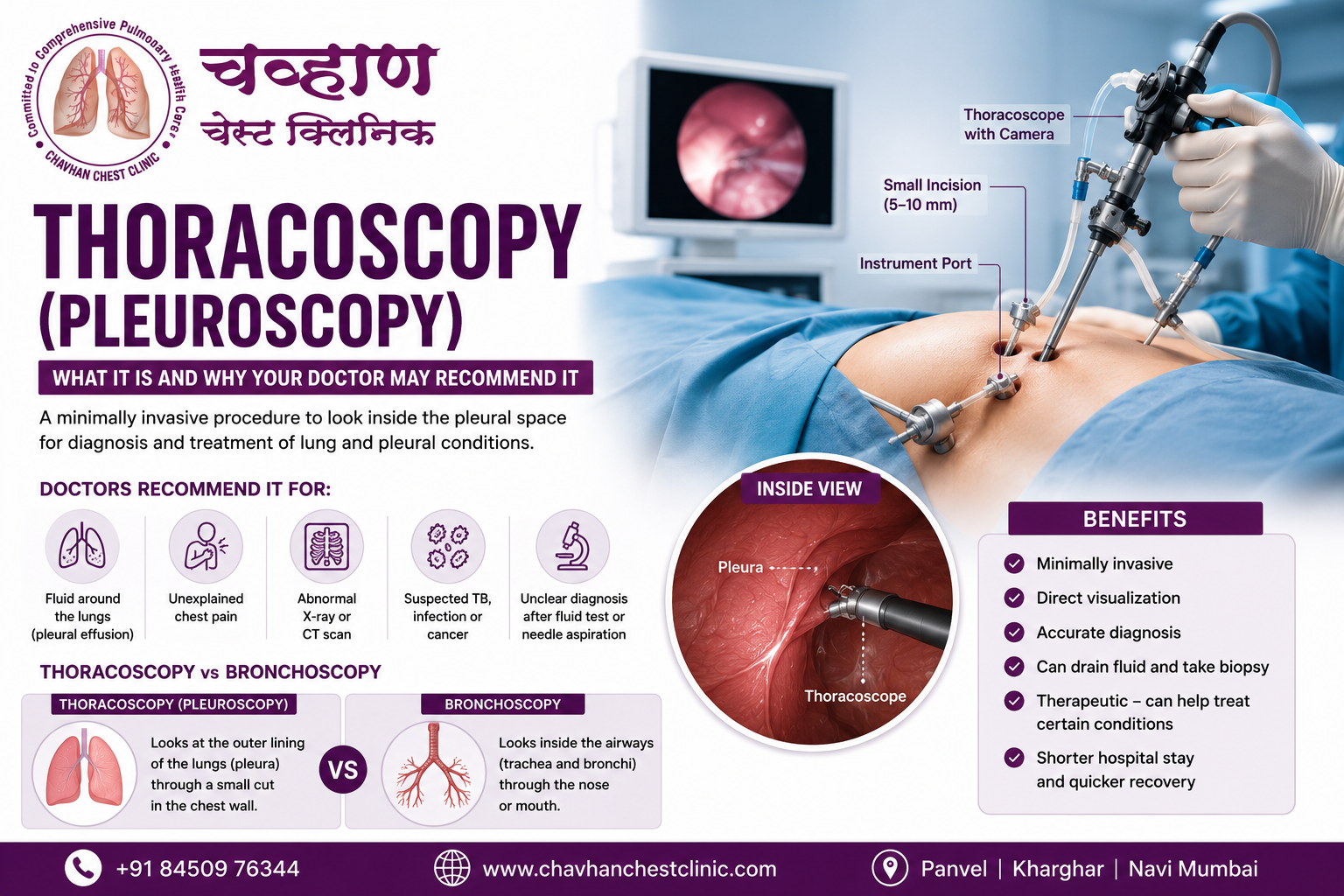
Thoracoscopy is a thoracoscopy procedure where a doctor inserts a thin tube with a camera and light through a small incision in the chest wall to directly look at the pleura, the thin lining around the lungs and inside the chest cavity. It gives a much clearer picture than an X-ray or CT scan alone, since the doctor can actually see the surface of the lung and pleura in real time.
The pleuroscopy meaning is essentially the same procedure, just a more precise name for it. “Pleuroscopy” specifically refers to examining the pleural space, while “thoracoscopy” is the broader term. Doctors often use the two words interchangeably, so if you’ve heard both, you’re not dealing with two different tests.
Why Doctors Recommend It
This procedure usually comes up when something isn’t adding up from simpler tests. Common reasons include:
- Fluid building up around the lungs with no clear cause, which needs a proper pleural effusion diagnosis
- Persistent chest pain that hasn’t been explained by blood tests or imaging alone
- An abnormal chest X-ray or CT scan showing thickening or nodules on the pleura
- Suspected tuberculosis, infection, or cancer affecting the lining of the lung
- A need for pleural disease diagnosis when a simple pleural fluid test through needle aspiration hasn’t given a clear answer
In short, it’s usually the next step when your doctor needs to see the problem directly instead of guessing from scans alone.
Thoracoscopy vs Bronchoscopy: What’s the Difference
These two get confused often, mostly because both involve a camera going into the chest area. Here’s the actual difference. A bronchoscopy looks inside the airways, the trachea and bronchial tubes, using a thin tube passed through the nose or mouth. It’s used for problems inside the lungs themselves, like a persistent cough, suspected airway blockage, or lung infections.
A thoracoscopy, on the other hand, goes through a small cut in the chest wall to look at the outside surface of the lung and the pleural space around it. So thoracoscopy vs bronchoscopy really comes down to what’s being examined, the airways from the inside, or the lung’s outer lining and the space around it. If your doctor has recommended one over the other, it’s because your specific symptoms and scan results point to a different area needing a closer look.
Medical Thoracoscopy vs Surgical Thoracoscopy
This distinction matters more than most patients realize. Medical thoracoscopy vs surgical thoracoscopy (also called VATS, or video-assisted thoracoscopic surgery) are not the same thing, even though they sound similar and use comparable equipment.
Medical thoracoscopy is done by a pulmonologist, usually under local anaesthesia with light sedation, in an endoscopy suite rather than an operating theatre. It’s mainly used for diagnosis, draining fluid, taking a biopsy, or performing pleurodesis to stop fluid from building up again. Surgical thoracoscopy (VATS) is performed by a thoracic surgeon under general anaesthesia in an operating room, and is used for more extensive procedures like removing part of a lung or treating cancer directly.
If your doctor has recommended thoracoscopy for diagnosis rather than surgery, you’re most likely looking at the medical version, which is a minimally invasive lung procedure with a much shorter recovery than surgery.
How the Procedure Works
You’ll typically be asked to fast for a few hours before the procedure and stop certain blood-thinning medications a few days in advance if applicable. During the procedure itself, you’ll be given sedation and local anaesthesia to numb the chest wall. A small incision is made between the ribs, and the thoracoscope is inserted to examine the pleural space.
Depending on what’s needed, the doctor may drain fluid as part of a lung fluid drainage procedure, take tissue samples through a pleural biopsy procedure, or apply talc to prevent fluid from recurring. Once done, a chest tube is usually left in place for a day or two to drain any remaining fluid or air, and you’ll get a follow-up chest X-ray to check everything looks fine.
Is Thoracoscopy Painful
This is usually the first question people actually want answered. Because of the sedation and local anaesthesia used, is thoracoscopy painful during the procedure itself is a no for most patients. You may feel some pressure or a pulling sensation, but not sharp pain. Afterward, it’s common to have soreness at the incision site and mild discomfort while breathing deeply or coughing for a few days, which is usually managed well with standard pain relief.
What Recovery Looks Like
Thoracoscopy recovery time is generally short compared to open chest surgery. Most patients stay in the hospital for one to two days, mainly to monitor the chest tube and confirm there’s no air or fluid leak. Once the tube is removed and the follow-up X-ray looks clear, most people can go home and return to light activity within a few days, with full recovery typically within one to two weeks depending on what was done during the procedure.
You’ll likely be advised to avoid heavy lifting or strenuous activity for a short period, and to watch for any fever, worsening breathlessness, or unusual swelling at the incision site during recovery.
Thoracoscopy Risks
Like any procedure that involves entering the chest, there are some thoracoscopy risks, though serious complications are uncommon when performed by an experienced specialist. These can include minor bleeding, infection at the incision site, air leakage, or in rare cases, a reaction to sedation. Your doctor will screen for factors that increase risk, such as bleeding disorders or certain lung conditions, before deciding if the procedure is appropriate for you.
Cost of Thoracoscopy in India
For patients researching thoracoscopy cost in India, pricing depends heavily on whether it’s a diagnostic procedure done under local anaesthesia or a more involved surgical approach requiring general anaesthesia and an operating theatre, along with hospital stay duration and any additional treatment done during the same sitting. The lung fluid drainage cost is generally the smaller component compared to biopsy analysis and hospital charges. If you’re exploring thoracoscopy in Mumbai, it’s worth discussing your specific case with your doctor directly, since the right approach and price point depend on your diagnosis, not a fixed number.
Frequently Asked Questions
How is thoracoscopy different from a simple pleural fluid tap? A pleural fluid tap (thoracentesis) only removes fluid with a needle for testing. Thoracoscopy allows the doctor to see the pleura directly and take a tissue biopsy, which gives a far more accurate diagnosis when a fluid test alone isn’t conclusive.
Will I be awake during the procedure? For medical thoracoscopy, you’re usually sedated but not fully unconscious, similar to how you’d feel during a colonoscopy. You won’t be aware of the procedure happening in real time.
How soon will I get my results? Fluid analysis results are usually available within a few days, while a tissue biopsy sent for detailed pathology can take one to two weeks, particularly if it needs specialised staining to rule out infection or cancer.
Can thoracoscopy detect lung cancer? Yes, it’s one of the most reliable ways to diagnose cancer affecting the pleura or lung lining when scans and fluid tests alone haven’t given a clear answer, since a direct tissue biopsy gives far more diagnostic certainty.
When to See a Specialist
If you’ve been told you need a thoracoscopy, or you’re dealing with unexplained fluid around the lungs, persistent chest pain, or an abnormal scan that hasn’t been explained yet, getting the right specialist involved early makes a real difference to both comfort and diagnostic accuracy.
Dr. Vinod Chavhan, a pulmonologist in Navi Mumbai with over a decade of experience in chest and respiratory medicine, has performed a wide range of advanced pulmonary diagnostic procedures, including thoracoscopy, bronchoscopy, and pleural biopsies. Practising at Chavhan Chest Clinic in Panvel and consulting at Kokilaben Hospital, he’s a trusted chest specialist in Kharghar and across Navi Mumbai, guiding patients through the entire process, from the first consultation to diagnosis and treatment, with clear communication at every step.
If you’re feeling anxious about an upcoming thoracoscopy or still trying to understand why it’s been recommended, book a consultation with Dr. Vinod Chavhan and get straightforward answers before you go ahead with anything.
