Defeating MDR-TB: Why Early Diagnosis Is the Key to Successful Recovery
A Story Too Common in Mumbai: When a ‘Normal Cough’ Wasn’t Normal At All
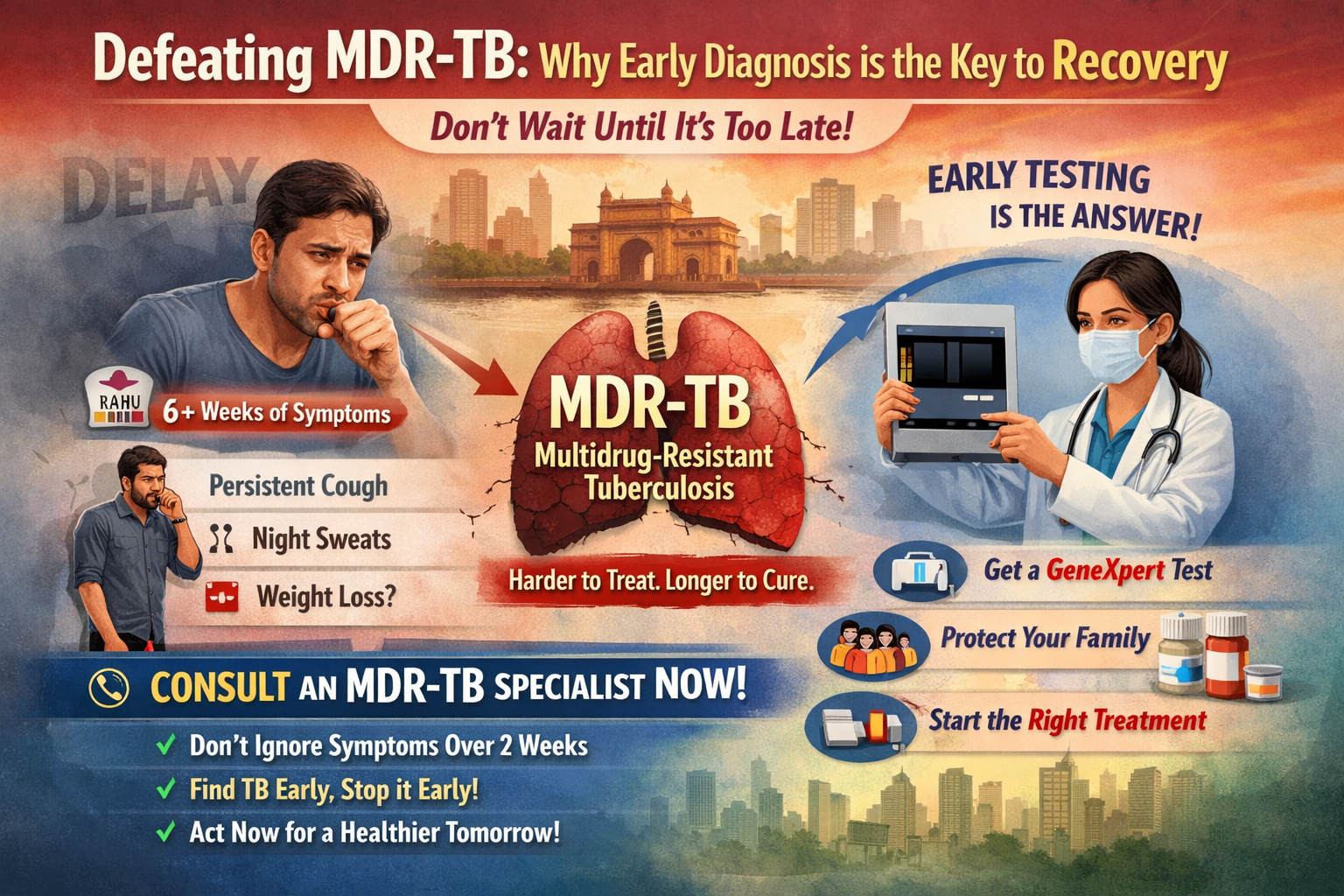
Rahul, a 34-year-old schoolteacher from Kurla, had been coughing for nearly six weeks. He chalked it up to pollution, the change in weather, and the stress of managing a classroom of forty students. His wife noticed he had lost weight – about 4 kilograms in two months – and was sweating through his shirt every night. He took some over-the-counter cough syrup. Then an antibiotic from the neighbourhood chemist. Nothing worked.
By the time Rahul finally visited a chest specialist seeking TB treatment in Mumbai, his diagnosis was not what he expected: he had Multidrug-Resistant Tuberculosis – MDR-TB. His heart sank. He had heard of TB. He thought it was the kind of disease that was treated quickly and forgotten. But MDR-TB is different. It is harder to treat, takes longer, and – crucially – it could have been caught much earlier.
Rahul’s story is not unique. Every year, India reports over 1.2 lakh new MDR-TB cases, making it one of the highest burdens in the world. And behind most of those numbers is a delay – a period of waiting, hoping symptoms would pass, or taking the wrong treatment instead of timely TB treatment in Mumbai. That delay changes everything.
What Most People in India Still Don’t Understand About TB
There is a myth that floats quietly through many Indian households: ‘TB is curable, so there’s no rush.’ And to be fair, the first part is true – tuberculosis is indeed curable. But the second part – the ‘no rush’ – is dangerously wrong.
TB Is Curable – But Delay Breaks That Promise
Drug-Sensitive TB, when caught early and treated correctly, has a cure rate of approximately 85–90%. Six months of medication, strict adherence, and regular monitoring – and most patients recover completely. But when diagnosis is delayed, the bacteria gets more time to spread in the lungs and the body. Partially treated or delayed TB creates the perfect conditions for drug resistance to develop.
Why Is MDR-TB Increasing in India?
India contributes nearly 27% of the global TB burden. Several factors fuel the rise of drug-resistant strains:
• Patients stopping treatment mid-way when symptoms improve (but before the infection is eliminated)
• Self-medicating with antibiotics that are not appropriate for TB
• Incorrect or incomplete prescriptions from unqualified practitioners
• Transmission of already-resistant TB strains from person to person
• Overcrowded urban environments – like many areas of Mumbai – accelerating spread
Understanding this is not about blame. It is about changing behaviour – yours, your family’s, your community’s. If you have persistent symptoms, the right move is early testing, not waiting.
MDR-TB vs Regular TB: What’s Really Different?
Here is a straightforward comparison that explains why MDR-TB requires specialist care – and why early identification matters so much:
| Factor | Drug-Sensitive TB (DS-TB) | MDR-TB (Multidrug-Resistant TB) |
| What it means | Responds to standard first-line drugs (Rifampicin, Isoniazid) | Resistant to at least Rifampicin and Isoniazid – the two most powerful TB drugs |
| Treatment duration | 6 months | 18–24 months (or longer) |
| Medicines used | 4 standard first-line drugs | Multiple second-line drugs – often more toxic and harder to tolerate |
| Success rate | ~85–90% with adherence | ~55–70% – lower due to complexity |
| Cost of treatment | Relatively low; free under RNTCP | Significantly higher; more monitoring needed |
| Risk if untreated | Can progress and spread further | Can progress to XDR-TB (extensively drug-resistant), which is far harder to treat |
| Testing required | Sputum smear + culture | GeneXpert / Line Probe Assay (LPA) – mandatory |
The most important takeaway from this table: standard TB drugs do not work for MDR-TB. Giving a patient with drug-resistant tuberculosis the usual first-line medicines is not just ineffective – it can actually cause more harm by continuing to select for resistant bacteria. This is why a correct, early diagnosis is the foundation of everything.
Symptoms of Tuberculosis in 2026: What to Watch For
The symptoms of TB have not changed dramatically, but awareness has – and our understanding of how those symptoms evolve (and confuse) has grown. Here is what patients need to know in 2026:
| Symptom | What It Feels Like | When to Be Concerned |
| Persistent Cough | Dry or productive cough, may have mucus or blood-tinged sputum | Lasting more than 2 weeks – don’t dismiss it as seasonal |
| Low-Grade Fever | Mild fever (99–100°F), especially in the evenings | Ongoing for days or weeks with no clear cause |
| Unexplained Weight Loss | Losing weight without dieting or increased exercise | Losing more than 2–3 kg over a month without reason |
| Night Sweats | Drenching sweats during sleep, often waking up soaked | Recurring and disruptive to sleep – not just hot weather |
| Fatigue & Weakness | Persistent tiredness that rest doesn’t fix | Interfering with daily work or activities |
| Chest Pain / Breathlessness | Tightness, pain on breathing, or shortness of breath | With cough and fever – may indicate lung involvement |
The Overlap Problem: Why TB Gets Missed
One of the most medically significant challenges is that TB symptoms overlap heavily with other common conditions – flu, COVID-19 recovery fatigue, viral fevers, and even stress. This is why many patients, and even some general practitioners, delay a TB-specific workup.
The rule of thumb: if a cough, fever, or unexplained weight loss persists for more than 2 weeks, a chest X-ray and sputum test are not optional – they are essential. In a city like Mumbai, where TB transmission is higher in dense areas, this threshold should be taken seriously.
| 🩺 CLINICAL NOTE: MDR-TB does not always look different from regular TB clinically. You cannot tell them apart by symptoms alone. Molecular testing – like GeneXpert – is the only reliable way to identify drug resistance early. |
Why Early Diagnosis Changes Everything in TB
This is the heart of the matter. Early diagnosis is not just a medical best practice – it is the single most important factor that determines whether a TB patient recovers fully or faces a long, difficult road.
At Early-Stage TB: Near 100% Cure Rate
When TB is caught in its early phase – before significant lung damage, before drug resistance develops – the treatment is straightforward and highly effective. Patients on standard treatment who are diagnosed early and adhere to the full course have cure rates approaching 90% or above. The lungs recover. Life returns to normal.
Late Detection: The Drug Resistance Risk
Every month of delayed treatment increases the probability of:
• Developing drug resistance through suboptimal or incomplete treatment
• Transmitting infection to household contacts (family members, children)
• Irreversible lung damage that persists even after the infection is cured
• Progression to MDR-TB or even XDR-TB (Extensively Drug-Resistant TB)
Who Should Be Screened Urgently?
Certain groups face higher risk and should not wait for symptoms to become severe before seeking testing:
• Household contacts of confirmed TB patients
• People living with HIV or on immunosuppressive therapy
• Diabetics – who have significantly higher TB susceptibility
• Healthcare workers in close contact with patients
• Residents or workers in densely populated areas
• Anyone who has previously been treated for TB
GeneXpert Test: The Game-Changer in TB Diagnosis
If there is one diagnostic advancement that has genuinely transformed TB care in the last decade, it is the GeneXpert MTB/RIF test. And today, in 2026, it is available in major cities across India, including Mumbai.
What Does the GeneXpert Test Do?
GeneXpert is a molecular diagnostic test – specifically a nucleic acid amplification test (NAAT) – that detects two critical things simultaneously:
• The presence of Mycobacterium tuberculosis (the TB-causing bacteria) in the sputum sample
• Resistance to Rifampicin – one of the most important first-line TB drugs – which serves as a reliable marker for MDR-TB
Why Is It Better Than the Old Smear Test?
Traditional sputum smear microscopy, while inexpensive, has significant limitations – it misses around 30–40% of cases, particularly in patients with early-stage TB or HIV co-infection. GeneXpert’s advantage is speed, sensitivity, and specificity:
• Results in 2 hours, compared to days or weeks for culture
• Detects TB even in smear-negative cases
• Simultaneously identifies Rifampicin resistance – meaning you know within hours if MDR-TB is likely
• Reduces the window of delayed diagnosis from weeks to a single day
GeneXpert Test Price in Mumbai
For patients wondering about accessibility: GeneXpert testing is available free of charge at government-designated TB centres under India’s National TB Elimination Programme (NTEP). In private diagnostic labs across Mumbai, the test typically costs between ₹1,500 to ₹3,500 depending on the facility. Many hospitals with dedicated chest medicine or pulmonology departments offer in-house GeneXpert testing for faster turnaround.
| 💡 IMPORTANT: If you have a persistent cough and fever, ask your doctor specifically about GeneXpert testing. A standard chest X-ray alone is not sufficient to diagnose or rule out MDR-TB. |
MDR-TB Treatment in 2026: Difficult, But Absolutely Achievable
Being diagnosed with MDR-TB is understandably frightening. But it is important to know – with the right specialist care, the right drug regimen, and consistent follow-through, MDR-TB is treatable. Thousands of patients in India successfully complete treatment every year and go on to live healthy, full lives.
The Role of an MDR-TB Specialist Doctor
MDR-TB management is not the same as regular TB management. It requires a specialist – a pulmonologist or infectious disease physician with specific experience in drug-resistant TB. The role of the specialist includes:
• Detailed drug susceptibility testing (DST) to identify which second-line drugs will be effective
• Designing a personalised treatment regimen based on resistance patterns
• Monitoring for side effects, which are more common with second-line drugs (hearing changes, kidney function, psychiatric symptoms)
• Regular sputum culture monitoring to track treatment response
• Counselling on adherence – missing doses in MDR-TB can create even more resistance
Treatment Duration and What to Expect
Unlike standard TB, which runs for 6 months, MDR-TB treatment typically spans 18 to 24 months. Newer shorter regimens (like the BPaL regimen – Bedaquiline, Pretomanid, Linezolid) are being increasingly used and approved, with some programmes showing success in as few as 6–9 months. Your specialist will determine the best approach based on your specific resistance profile.
The New Generation of MDR-TB Drugs
In recent years, two drugs have changed the MDR-TB landscape significantly: Bedaquiline and Delamanid. These are now available under RNTCP in India, including at designated drug-resistant TB (DR-TB) centres in Mumbai. They have improved outcomes substantially compared to older second-line regimens.
Adherence: Non-Negotiable
Completing the full course of MDR-TB treatment is not optional – it is the difference between cure and treatment failure. Unlike a typical illness where stopping medication when you feel better is inconvenient but manageable, in MDR-TB, stopping early or missing doses consistently can lead to XDR-TB, which is extremely difficult to treat.
Latent TB: The Silent Risk Nobody Talks About
There is a form of TB that most people – and even many patients – are completely unaware of: Latent TB Infection (LTBI). And it plays a crucial, often overlooked role in the MDR-TB story.
What Is Latent TB?
When a person is exposed to the TB bacteria and their immune system contains the infection but does not eliminate it, the bacteria can lie dormant – inactive, causing no symptoms – sometimes for years or even decades. This is latent TB. The person feels perfectly healthy. They cannot infect others. But the threat is real.
When Can Latent TB Become MDR-TB?
Latent TB can reactivate – particularly when the immune system is weakened. Risk factors for reactivation include:
• HIV infection or AIDS
• Starting biologic therapies or corticosteroids
• Diabetes (poorly controlled)
• Malnutrition or significant weight loss
• Organ transplantation and associated immunosuppression
• Cancer treatment
If the original latent infection was acquired from a person with drug-resistant TB, the reactivated disease will also be drug-resistant. This is why latent TB diagnosis and treatment – specifically in high-risk groups – is an essential part of controlling MDR-TB.
Testing for Latent TB
The Tuberculin Skin Test (TST/Mantoux) and the more accurate Interferon-Gamma Release Assay (IGRA) blood test can identify latent TB infection. These are particularly recommended for household contacts of TB patients, immunocompromised individuals, and healthcare workers. Preventive therapy – typically 6 months of Isoniazid – can eliminate latent TB before it ever becomes active.
TB Treatment in Mumbai: World-Class Care Is Within Reach
If you are in Mumbai and concerned about TB symptoms, the good news is clear: the city has one of the most developed TB diagnostic and treatment ecosystems in India.
Government Infrastructure: Free and Accessible
Mumbai’s municipal TB clinics, DOTS centres, and government-designated DR-TB centres (like those under the Brihanmumbai Municipal Corporation – BMC) provide free GeneXpert testing, drug susceptibility testing, and access to Bedaquiline and other newer drugs. The National TB Elimination Programme (NTEP) ensures that diagnosed MDR-TB patients receive free treatment throughout their care journey.
Private Specialist Centres: Advanced Care With Faster Access
For patients seeking faster appointments, specialist-level care, and comprehensive pulmonology workups, Mumbai’s private healthcare sector offers excellent options:
• Dedicated pulmonology and chest medicine departments in leading hospitals
• On-site GeneXpert testing with results within the same day
• Line Probe Assays (LPA) for detailed first and second-line resistance profiling
• Whole-genome sequencing (WGS) at select centres for complex XDR-TB cases
• Multidisciplinary TB management teams including nutritionists and psychologists
What to Tell Your Doctor at the First Visit
When you consult an MDR TB specialist doctor in Mumbai, come prepared. Share:
• How long you have had symptoms and whether they are worsening
• Any previous TB treatment history – even if incomplete
• Close contacts with confirmed TB
• Any immunocompromising conditions (HIV, diabetes, steroids)
• Any prior antibiotic use, especially fluoroquinolones or injectables
This information directly influences the diagnostic approach and is crucial for correct, timely management.
Conclusion: Early Action Is Your Best Defence Against MDR-TB
The story we started with – Rahul, the teacher from Kurla – had a difficult road ahead of him after his MDR-TB diagnosis. Eighteen months of medication. Regular hospital visits. Side effects that required adjustments. But he finished treatment. His lungs healed. He is back in his classroom.
His outcome could have been simpler, faster, and less complicated if he had not waited those critical weeks. That is the only difference between his story and a shorter, easier one.
If there is one message to carry forward from everything you have read here, it is this:
Summary: Key Takeaways
• Persistent cough, fever, night sweats, and weight loss lasting more than 2 weeks need TB testing
• MDR-TB is harder to treat than regular TB – but it is treatable when caught early
• GeneXpert is the gold-standard test and detects both TB and drug resistance in hours
• Latent TB can silently reactivate – especially in immunocompromised patients
• Drug resistant tuberculosis treatment in India is available free through RNTCP and through specialist private centres
• Early diagnosis in Mumbai is accessible – at government DOTS centres and private pulmonology clinics
