How to Know If Your Cough is Pneumonia or Just a Cold
You wake up coughing. Sore throat, some fatigue, maybe a mild fever. It feels like a cold, so you rest and wait. Five days pass. Six. The cough gets deeper, not lighter. Your chest starts to ache when you breathe in. Now you are wondering whether this is still just a cold or something worse.
Knowing how to know if your cough is pneumonia versus a cold is not always easy in the first few days. Both start with overlapping symptoms, and the difference between pneumonia and a cold is not obvious until things shift. But the signs of pneumonia do show up, and catching them early changes how fast you recover. This article covers pneumonia vs cold symptoms side by side, explains the specific pneumonia symptoms to watch for, walks through pneumonia treatment by type including Klebsiella pneumoniae treatment and aspiration pneumonia treatment, explains pneumonia in infants treatment, and tells you exactly when to stop waiting and see a doctor.
What Is the Common Cold?
The common cold is a viral infection of the nose and throat. Rhinoviruses cause most colds. Your immune system handles them without medication in the vast majority of cases.
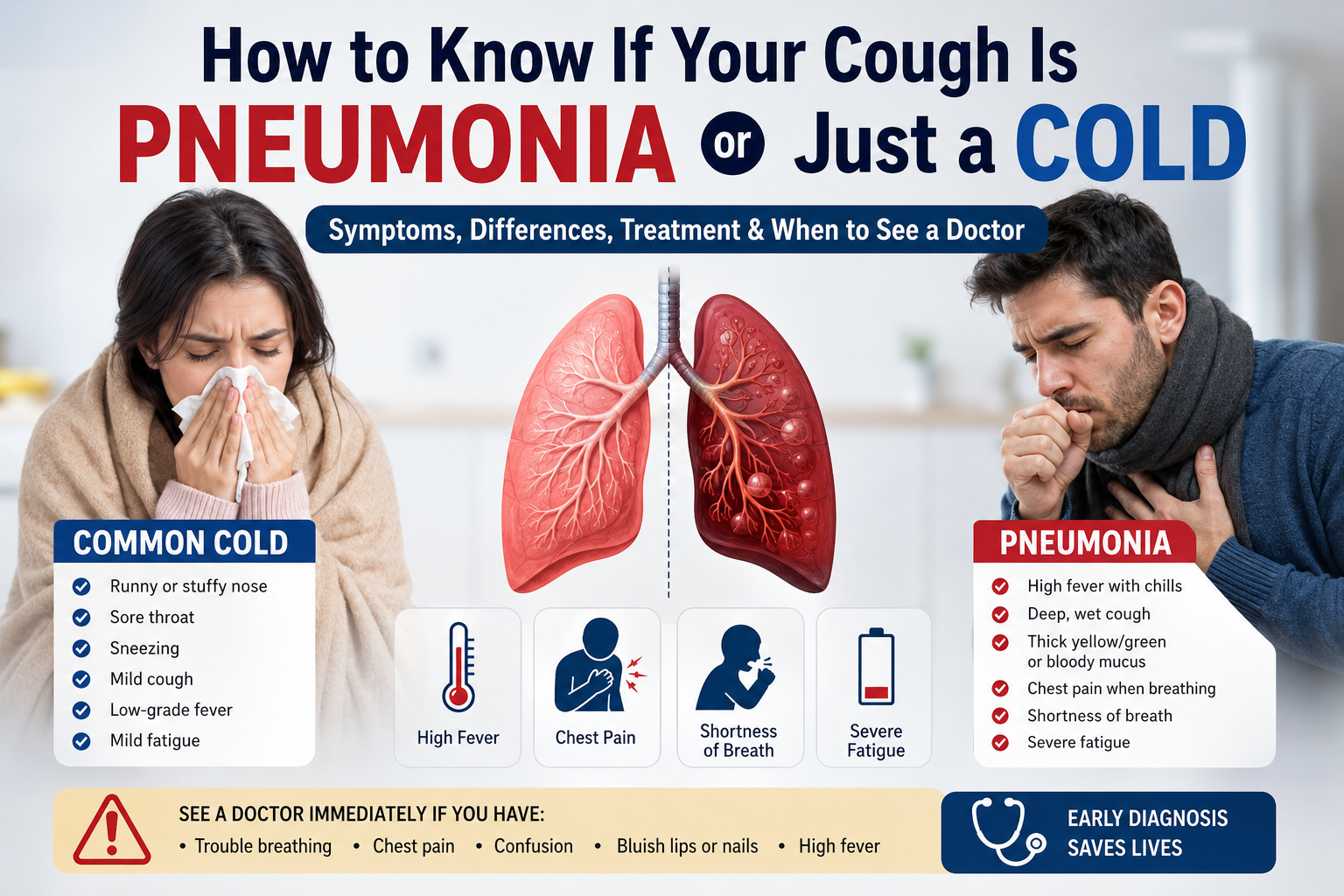
Cold symptoms build gradually over one to two days:
- Runny or stuffy nose
- Sore throat
- Sneezing
- Mild cough
- Low-grade fever, more common in children
- Mild fatigue
Colds peak around day two or three, then ease off. Most people feel normal again within 7 to 10 days. If symptoms are still going strong after 10 days, especially if you were getting better and then got worse again, that is when the question changes.
What Is Pneumonia?
Pneumonia is an infection inside the lungs, not just the upper airways. It causes the tiny air sacs in your lungs, called alveoli, to fill with fluid or pus. That is what makes breathing hard and prevents your blood from getting enough oxygen.
Bacteria, viruses, and fungi can all cause it. The most common bacterial cause is Streptococcus pneumoniae. Each type comes with different pneumonia symptoms and different pneumonia treatment needs, which is why the type matters.
Pneumonia vs Cold: Direct Symptom Comparison
Here is the clearest way to see cold vs pneumonia symptoms side by side:
| Feature | Common Cold | Pneumonia |
| Cause | Virus (usually rhinovirus) | Bacteria, virus, or fungi |
| Fever | Mild or none | High, often 101°F to 105°F (38.3 to 40.5°C) |
| Cough | Dry, mild, improves in days | Deep, wet, gets worse over time |
| Mucus color | Clear or white | Yellow, green, or blood-tinged |
| Chest pain | Rare | Common, sharp when breathing deeply |
| Shortness of breath | No | Yes, even with mild activity |
| Chills and sweating | Rare | Common |
| Fatigue | Mild | Severe |
| Duration | 7 to 10 days | Weeks without treatment |
| Bluish lips or nails | No | Possible in serious cases |
| Confusion (older adults) | No | Can appear before other symptoms |
The difference between pneumonia and a cold becomes obvious once chest pain and shortness of breath enter the picture. Those two symptoms do not belong to a cold.
Pneumonia Symptoms: What to Watch For
Many people dismiss early pneumonia because the first three days can look identical to a cold. Here are the signs of pneumonia that separate it from a regular respiratory virus:
1. A cough that gets worse, not better Cold coughs improve after a few days. A pneumonia cough goes the other direction. It gets deeper and more frequent and often starts producing thick mucus that is yellow, green, or occasionally streaked with blood. Tracking this change is one of the most reliable ways to spot cold vs pneumonia symptoms early.
2. High fever with chills A cold might produce a mild fever in the first day or two. Pneumonia pushes the fever higher, brings on shaking chills and heavy sweating, and the fever does not respond well to over-the-counter medication. A fever above 101°F (38.3°C) that will not come down on its own is one of the clearest pneumonia symptoms to act on.
3. Chest pain when breathing This is not a cold symptom. If your chest hurts when you take a deep breath or cough, your lung tissue is likely inflamed. This is one of the most definitive signs of pneumonia.
4. Shortness of breath during normal activity Feeling winded climbing stairs or walking across a room is not normal with a cold. With pneumonia, oxygen exchange in the lungs is impaired. Even light activity can leave you breathless. Oxygen saturation reading below 94% on a pulse oximeter is a clinical red flag tied to pneumonia symptoms.
5. A cold that improved and then got worse again Feeling better around day four or five, then suddenly having a fever return with a deepening cough, often means a bacterial infection has settled in on top of the original viral one. This reversal is one of the most common patterns in pneumonia vs cold cases.
6. Confusion or unusual drowsiness in older adults In people over 65, confusion can appear before respiratory symptoms become severe. It is one of the trickier signs of pneumonia because it looks nothing like a lung infection at first glance.
How to Know If Your Cough Is Pneumonia: A Self-Check
If you are sitting with a lingering cough and wondering whether to call a doctor, go through these questions:
- Has the cough lasted more than a week without improving?
- Is the cough producing thick, discolored mucus?
- Is there fever above 101°F (38.3°C)?
- Does the chest hurt when breathing deeply or coughing?
- Is there shortness of breath doing things that normally feel easy?
- Did symptoms improve for a few days and then suddenly get worse again?
Two or more yes answers means it is time to see a doctor. A chest X-ray is the standard way to confirm pneumonia and takes minutes. If oxygen saturation is below 94%, that makes the case for going in the same day even stronger.
One thing worth knowing: some forms of pneumonia, especially walking pneumonia, can show normal oxygen levels early on. A normal reading does not rule out pneumonia if the other signs of pneumonia are present.
Types of Pneumonia and Their Treatments
Not all pneumonia is the same. The type determines the pneumonia treatment, so understanding the difference between types matters.
Bacterial Pneumonia
The most common type, caused by Streptococcus pneumoniae and similar bacteria. Symptoms can come on suddenly or build over several days: high fever, shaking chills, productive cough with colored mucus, and chest pain. You will typically feel sick enough to stay in bed.
Pneumonia treatment: Antibiotics are required. The specific antibiotic is chosen based on which bacteria is most likely and your medical history. Most people start feeling better within two to three days of starting treatment. Always finish the full course.
Viral Pneumonia
Often follows a cold or flu. Symptoms develop more gradually: dry cough, headache, and muscle aches that intensify within a day or two. This type accounts for a large share of pneumonia cases, frequently caused by influenza and COVID-19.
Pneumonia treatment: Antibiotics do not help viral pneumonia. Treatment is rest, fluids, fever reducers, and in some cases antiviral medication when started early.
Walking Pneumonia (Atypical Pneumonia)
Caused by Mycoplasma pneumoniae. This is where cold vs pneumonia symptoms confusion is most common, because walking pneumonia genuinely mimics a cold: sore throat, congestion, low-grade fever, and a persistent dry cough. People stay functional enough to go about their day. The cough worsens at night and can drag on for weeks, which is the giveaway.
Pneumonia treatment: A five to seven day course of antibiotics clears it effectively. Without treatment, symptoms can linger for weeks.
Aspiration Pneumonia
Happens when food, liquid, saliva, or vomit is accidentally inhaled into the lungs. People at highest risk include those with swallowing difficulties, neurological conditions, those under general anesthesia, or heavy alcohol users. Aspiration pneumonia tends to affect the lower lung lobes and can develop quickly.
Aspiration pneumonia treatment: Antibiotics that cover the mouth bacteria most commonly responsible (anaerobes) are the first step. Addressing the underlying swallowing problem is part of the overall plan. If fluid has built up between the lung and chest wall, drainage may be needed. For older adults, follow-up care after initial treatment reduces the risk of recurrence.
Klebsiella Pneumoniae Pneumonia
A serious bacterial type caused by Klebsiella pneumoniae, a bacterium associated with aggressive, fast-moving lung infections. It is most common in people with weakened immune systems, diabetes, chronic alcohol use, or in hospital settings. Symptoms are severe: high fever, thick bloody or rust-colored mucus, and rapid deterioration compared to typical bacterial pneumonia.
Klebsiella pneumoniae treatment: Targeted antibiotics are required, and the choice is not straightforward because Klebsiella has developed resistance to many commonly used drugs. Lab culture and sensitivity testing are used to select the correct antibiotic. Mild community-acquired cases may be managed with oral antibiotics. Severe cases need intravenous antibiotics in a hospital. Drug-resistant strains, including ESBL-producing and carbapenem-resistant Klebsiella, require specialist infectious disease management.
Pneumonia in Infants: What Parents Need to Know
Pneumonia in infants is harder to catch early because babies cannot tell you what hurts. Current clinical guidelines provide clear direction on managing complicated cases in children older than three months.
Signs of pneumonia in infants to watch for:
- Breathing faster than normal (infants breathe at 30 to 60 times per minute; consistently faster than that is a flag)
- Chest or belly visibly working hard with each breath
- Flaring nostrils
- Grunting sounds when breathing out
- Persistent fever
- Poor feeding or refusing to eat
- Unusual fussiness or limpness
- Pale, bluish, or grayish color around the lips or fingernails
Newborns can show almost no obvious symptoms. They may just seem unusually tired, stop feeding well, or have an unstable temperature. That alone is reason to call a doctor.
Pneumonia in infants treatment depends on the cause, the child’s age, and how sick they are. Bacterial pneumonia in infants is treated with antibiotics. Many cases in older infants can be managed at home with oral antibiotics and close monitoring. Complicated cases involving fluid buildup around the lungs, called parapneumonic effusion, require hospital admission, intravenous antibiotics, and sometimes fluid drainage. Updated 2026 guidelines clarify when drainage procedures are preferred over surgical intervention in these complicated pediatric cases.
If your infant has any of the breathing signs listed above, see a doctor the same day. Do not wait.
How Pneumonia Is Diagnosed
When you visit a doctor concerned about pneumonia symptoms, here is what typically happens:
Physical exam and auscultation: The doctor listens to your lungs with a stethoscope. Crackling sounds (called rales) are associated with fluid in the air sacs and often point to pneumonia.
Chest X-ray: The standard confirmation test. It shows infected or inflamed areas as cloudy patches in the lung tissue. A normal chest X-ray rules out pneumonia in most cases.
Pulse oximetry: A small device clipped to your finger measures blood oxygen level. Below 94% is clinically significant and prompts further investigation. It is a fast screening tool but does not replace imaging.
Sputum test: A mucus sample coughed from deep in the lungs identifies the specific bacteria responsible. This is especially important for Klebsiella pneumoniae treatment, where knowing the exact strain and its resistances determines which antibiotic to use.
Blood tests: White blood cell count and inflammatory markers like CRP and procalcitonin help confirm whether an infection is bacterial and how severe it is.
Nasal swab: Tests for respiratory pathogens including influenza, COVID-19, RSV, and Mycoplasma pneumoniae.
CT scan: Used for complex or high-risk cases when X-ray findings are not clear enough, or to check for complications like lung abscess.
Pneumonia Treatment: Full Breakdown
Recovery from pneumonia takes real time. Some people feel back to normal within a week. Others take a month or more. Older adults hospitalized with severe pneumonia have a median recovery time closer to 19 days, and that extends further for those with diabetes, COPD, or other underlying conditions.
At home (mild to moderate cases):
- Prescribed antibiotics if bacterial, completed in full
- Rest is not optional. Do not push through
- Stay well hydrated to help thin mucus and keep airways clearer
- Fever reducers and pain medication for comfort
- Avoid smoking. It damages the cilia that normally help clear infection from the lungs
In hospital (severe cases):
- Intravenous antibiotics
- Supplemental oxygen via mask or nasal cannula
- IV fluids
- Breathing treatments
- Mechanical ventilation in cases of severe respiratory failure
High-risk groups more likely to need hospital care include adults over 65, children under 2, and people with asthma, COPD, diabetes, heart disease, or weakened immune systems.
When a Cold Turns Into Pneumonia
A cold can progress into pneumonia, and the mechanism is straightforward. The viral infection irritates and inflames your airway lining while weakening local immune defenses. Bacteria that normally live harmlessly in your nose and throat travel deeper into the lungs. The result is bacterial pneumonia on top of the original viral infection.
Recognizing the pattern: symptoms improve for a few days around day four or five, then a fever returns and the cough deepens. You feel worse than you did at the start. That reversal is a warning sign that this is no longer just a cold.
People at highest risk for this progression include smokers, those with asthma or COPD, adults over 65, anyone immunocompromised, and people regularly exposed to poor air quality, since chronically polluted air irritates lung tissue and weakens the respiratory immune barrier over time.
Prevention
Getting vaccinated is the most effective single step. The pneumococcal vaccine protects against Streptococcus pneumoniae, the most common bacterial cause. The annual influenza vaccine reduces the risk of viral pneumonia following flu. Both are recommended for adults over 65, people with chronic health conditions, and young children.
Wash hands regularly, especially in crowded settings. Respiratory pathogens spread through droplets from coughing and sneezing.
Do not smoke. Smoking damages the cilia in your airways, the tiny hair-like structures that sweep bacteria and debris out before they cause infection. That damage is a main reason smokers develop pneumonia more often and recover more slowly.
Stay hydrated and prioritize sleep. Both directly support how well your immune system responds to infection.
If you live in a high-pollution city, wearing a mask on heavy smog days and keeping windows closed during poor-air periods reduces the chronic airway irritation that makes respiratory infections more likely to develop into pneumonia.
When to See a Doctor: Do Not Wait
Go to a doctor or urgent care the same day if you have any of these:
- Fever above 103°F (39.4°C) that is not responding to medication
- Chest pain when breathing or coughing
- Shortness of breath at rest or with light activity
- Cough producing discolored or blood-tinged mucus
- Lips, fingertips, or nails turning blue or grayish
- Confusion or unusual drowsiness, especially in older adults
- A cold that improved and then suddenly got worse again
- Any respiratory symptoms in an infant under 12 months
- Oxygen saturation reading below 94% on a home pulse oximeter
Call emergency services immediately if breathing becomes severely labored, the person cannot finish a sentence without stopping to breathe, or there is any blue coloring of the lips or nails.
