Diseases Caused by Air Pollution: What You Need to Know
If you live in Mumbai or Navi Mumbai, you already know the air is not clean. What you may not fully know is what that air is doing to your body right now, today, and what it has been quietly doing for years.
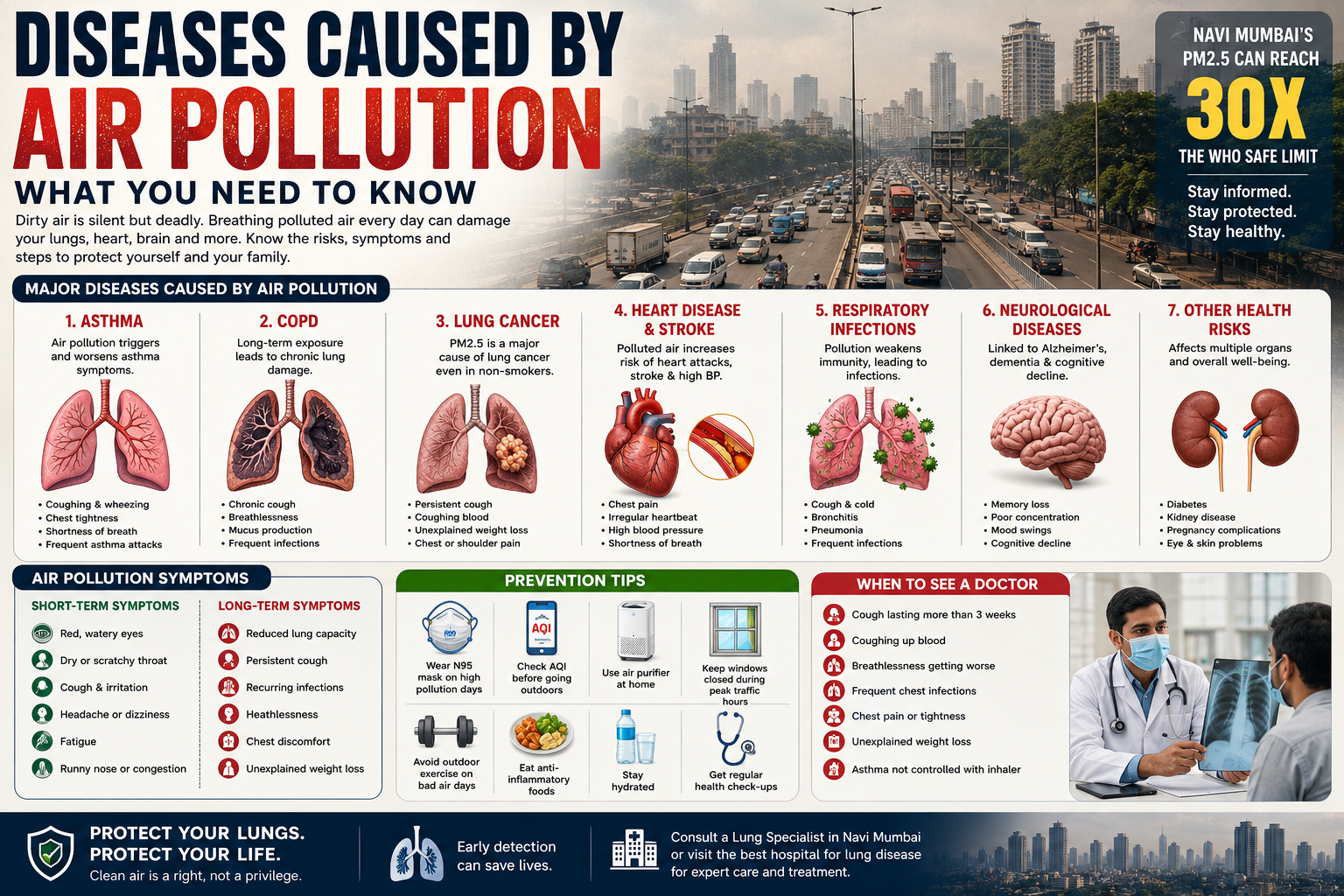
Diseases caused by air pollution are not limited to coughing or a scratchy throat. The list includes lung cancer, heart attacks, stroke, COPD, Alzheimer’s disease, kidney damage, and complications in pregnancy. According to the State of Global Air 2025 report, poor air quality caused 7.9 million deaths worldwide in 2023 alone. Of those deaths, 86% were from non-communicable diseases including heart disease, lung cancer, and chronic respiratory conditions.
These are not distant statistics. Navi Mumbai’s PM2.5 readings hit nearly 30 times the WHO safe limit during winter months. Mumbai’s own geography traps pollutants on certain days, creating sudden dangerous spikes even when the general AQI looks manageable.
This blog covers the major air pollution diseases, their symptoms, how polluted air damages the body, what the air pollution health effects look like locally in Navi Mumbai and Mumbai, and exactly when you should stop waiting and see a doctor.
How Polluted Air Enters and Damages Your Body
Before getting into specific diseases, it helps to understand the mechanism. Because air pollution does not just affect your lungs. It affects every organ.
When you breathe in polluted air, particles called PM2.5 (2.5 microns in diameter, so small that 60 of them fit across a human hair) bypass your nose and throat’s natural defences. They travel deep into the lung tissue, and the smallest ones pass directly into the bloodstream.
Once in your blood, they circulate everywhere. They reach your heart. Your brain. Your liver and kidneys. Wherever they land, they trigger inflammation and oxidative stress, which is cell damage from toxic chemical reactions.
This is why the effects of air pollution on health extend so far beyond breathing problems. It is a full-body exposure happening with every single breath.
The main pollutants driving this damage are:
PM2.5 and PM10 — microscopic particles from vehicles, construction, and burning waste that penetrate lung tissue and enter the bloodstream.
Nitrogen Dioxide (NO2) — released from vehicle exhaust and industrial activity, directly irritates and inflames airways.
Sulphur Dioxide (SO2) — from burning fossil fuels, causes coughing, throat irritation, and triggers asthma attacks.
Ozone (O3) — ground-level ozone forms when vehicle emissions react with sunlight, worsening lung inflammation.
Carbon Monoxide (CO) — reduces oxygen-carrying capacity of blood, particularly dangerous for people with heart conditions.
Major Diseases Caused by Air Pollution
1. Asthma — Air Pollution and Asthma Symptoms Explained
Asthma is the most immediately visible of all air pollution diseases. PM2.5 and ozone are the main triggers. They irritate and inflame the airway lining, causing it to swell and narrow. Breathing becomes laboured. For people who already have asthma, polluted air turns a manageable condition into a daily crisis.
Air pollution and asthma symptoms to watch for:
- Coughing that worsens in the morning or at night, especially on high-AQI days
- Wheezing or a whistling sound when breathing
- Chest tightness that builds through the day
- Shortness of breath during mild activity like walking upstairs
- Needing an inhaler more often than usual during October to February (peak pollution months in Navi Mumbai)
Children are the most vulnerable group. Their airways are narrower, their lungs are still developing, and they breathe more air relative to their body weight than adults. Research published in 2024 tied PM2.5 exposure in early childhood to significantly increased asthma incidence, with children in urban, lower-resource communities facing the highest risk.
If a child in your home is using their inhaler several times a week or is waking up coughing at night regularly, that is not just a cold. It needs assessment from a respiratory doctor in Navi Mumbai or a paediatric pulmonologist.
2. Chronic Obstructive Pulmonary Disease (COPD) — Air Pollution and Lung Diseases
COPD covers two conditions: chronic bronchitis (ongoing airway inflammation with mucus) and emphysema (destruction of the small air sacs in the lungs). Together, they make breathing progressively harder over time.
Air pollution and lung diseases like COPD are strongly connected. Long-term exposure to PM2.5 and NO2 accelerates COPD even in non-smokers. The damage is slow and cumulative, which is why people often dismiss early symptoms as “getting older” or “just a smoker’s cough” even when they have never smoked.
Symptoms suggesting COPD:
- Persistent cough with mucus production lasting months, not weeks
- Progressive breathlessness — activities that were easy two years ago are now tiring
- Feeling you cannot fully exhale, like air is trapped in the chest
- Frequent chest infections (two or more times a year)
- A daily “chest clearing” routine in the morning that you have just accepted as normal
COPD cannot be reversed. Lung tissue lost to emphysema does not regenerate. But early diagnosis with spirometry testing can slow progression significantly and improve quality of life. If any of the above describes you, visit the best hospital for lung disease in Navi Mumbai for a pulmonary function test before the damage advances further.
3. Lung Cancer — Air Pollution and Cancer Risk
This is the fact most people find hardest to accept: you do not have to smoke to get lung cancer from air pollution.
The International Agency for Research on Cancer has classified PM2.5 as a definite human carcinogen. Long-term exposure to polluted air, particularly diesel exhaust and fine particulate matter, causes DNA mutations in lung cells that eventually become malignant.
Air pollution and cancer risk in India has reached a turning point. In the 1980s, over 90% of lung cancer patients in India were smokers, typically men over 50. By 2018, 50% of lung cancer cases in North India involved non-smokers, and more than 21% of patients were under 50. Dr. Arvind Kumar, a leading lung surgeon, has reported regularly operating on patients as young as 14 to 16 with black-stained lungs and no history of smoking whatsoever.
Lung cancer is the world’s leading cause of cancer death, and among non-smokers specifically it now ranks as the fifth highest cause of cancer mortality globally.
Early warning signs of lung cancer:
- A new persistent cough that does not clear in 3 weeks
- Blood in cough or sputum, even a small amount
- Hoarse voice lasting more than two weeks without a cold
- Unexplained weight loss (more than 5% body weight without dieting)
- Chest or shoulder pain that worsens with deep breathing
- Recurrent pneumonia in the same part of the lung
These symptoms at any age, especially if you live in a high-pollution area, need urgent investigation. Do not wait. See a lung specialist in Navi Mumbai immediately.
4. Heart Disease and Stroke — Air Pollution and Heart Disease
Air pollution and heart disease is a connection that still surprises most people. The lungs are visible victims. The heart is a hidden one.
When PM2.5 particles enter the bloodstream, they cause:
- Blood vessels to constrict and stiffen
- Blood pressure to rise
- Blood clot formation to increase
- Inflammation of the inner artery lining (endothelium)
Over years, this raises the risk of heart attacks, irregular heart rhythms (arrhythmias), heart failure, and stroke. Globally, ischemic heart disease and stroke together account for the largest share of deaths linked to air pollution, more than lung disease.
People with pre-existing hypertension, diabetes, or high cholesterol carry the greatest additional risk from air pollution. Their cardiovascular systems are already stressed. Pollution adds another consistent load that their hearts must absorb.
In Navi Mumbai, where PM2.5 peaks can reach 140 micrograms per cubic metre or higher, even a single day of severe exposure can trigger cardiac events in vulnerable individuals. This is not a long-term-only risk. It is immediate for those already at risk.
Warning signs that need urgent attention:
- Chest pain or tightness, especially during or after outdoor activity on high-AQI days
- Sudden shortness of breath at rest
- Heart palpitations or irregular heartbeat
- Dizziness, sweating, or nausea without obvious cause
Call a doctor or emergency services. Do not drive yourself to hospital if you suspect a cardiac event.
5. Respiratory Infections — Pneumonia and Bronchitis
Healthy airways have a lining of mucus and hair-like structures called cilia that trap bacteria and viruses and push them back out before they reach the lungs. Chronic exposure to air pollution damages this lining. The cilia slow down. The mucus changes composition. The defence breaks down.
The result: bacteria and viruses get further into the respiratory tract. Infections are easier to catch and harder to clear. This is why pollution related diseases include higher rates of acute bronchitis and pneumonia, not just chronic conditions.
In 2019, air pollution was linked to over 700,000 deaths in children under five, with pneumonia and lower respiratory infections accounting for a major proportion. Elderly people face the same vulnerability, as their airways are already less effective at clearing pathogens.
If a family member keeps catching chest infections that do not fully resolve, or comes back with bronchitis or pneumonia more than once a year, the underlying airway damage from chronic pollution exposure is worth investigating.
6. Neurological Disease — Alzheimer’s, Dementia, and Cognitive Decline
The connection between air pollution and brain health has moved from emerging research to established concern. Ultrafine particles from vehicle exhaust can cross from the bloodstream into brain tissue directly, where they cause neuroinflammation.
The WHO now acknowledges links between long-term air pollution exposure and increased risk of Alzheimer’s disease, dementia, and general cognitive decline. A 2024 study specifically found that PM2.5 triggers DNA modifications in brain cells that are identical to those seen in early-stage Alzheimer’s disease.
For Mumbai and Navi Mumbai, where a large proportion of the adult population has been breathing elevated PM2.5 for decades, this is a public health concern worth tracking — particularly for anyone over 50 who notices worsening memory or concentration.
7. Other Pollution Related Diseases
Pollution related diseases extend beyond the respiratory and cardiovascular system. Research now links chronic air pollution exposure to:
Type 2 Diabetes — PM2.5 exposure causes systemic inflammation that disrupts insulin signalling. Long-term exposure increases diabetes risk independently of diet and physical activity.
Kidney Disease — Pollutants that enter the bloodstream impose ongoing oxidative stress on kidney tissue. People in heavily polluted areas show faster decline in kidney function over time.
Adverse Pregnancy Outcomes — Pregnant women exposed to high PM2.5 levels face increased risk of low birth weight babies, preterm labour, miscarriage, and dangerous blood pressure conditions during pregnancy. The pollutants can cross the placenta and affect the developing baby directly.
Eye and Skin Problems — Ozone and particulate matter irritate mucous membranes. Chronic eye irritation, redness, and allergic skin reactions are commonly reported during high-pollution periods in Mumbai.
Fatigue and Reduced Physical Stamina — Many urban residents in high-pollution areas report persistent fatigue that does not improve with sleep. Reduced oxygen delivery from inflamed airways and the cardiovascular burden of chronic inflammation are likely contributors.
Air Pollution Symptoms: What to Watch For
Effects of Air Pollution on Health – Short-Term Symptoms
These appear within hours or days of exposure to high pollution levels:
- Burning, watering, or red eyes
- Dry or scratchy throat
- Persistent dry cough, worse outdoors or in traffic
- Headache or dizziness, particularly after time spent outside
- Fatigue that does not respond to rest
- Runny nose or congestion with no fever or cold symptoms
- Worsening of asthma or breathing difficulty on days when AQI is high
- Skin irritation or aggravation of existing skin conditions
Long-Term Air Pollution Symptoms to Take Seriously
These develop over months or years of exposure and are often ignored until advanced:
- Reduced lung capacity noticed as increasing breathlessness on exertion
- Persistent cough lasting more than 3 weeks
- Recurring chest infections, two or more per year
- Unexplained weight loss
- Cardiovascular symptoms — breathlessness at rest, chest discomfort, palpitations
- Cognitive changes in older adults — memory gaps, difficulty concentrating
- Consistently lower energy and reduced physical stamina compared to a few years ago
Air Pollution Health Effects in Navi Mumbai – The Local Reality
Navi Mumbai is the largest planned city in the world. It was designed with green spaces and open roads. And yet air pollution health effects in Navi Mumbai are among the most serious in Maharashtra.
The city’s PM2.5 yearly average sits well above WHO guidelines. During peak winter months (November through February), readings have reached 140 to 147 micrograms per cubic metre — against the WHO’s recommended annual limit of 5 micrograms per cubic metre. That is roughly 30 times the safe level.
Main pollution sources in Navi Mumbai:
Heavy-duty vehicle emissions account for the largest share. Trucks and industrial vehicles operating in and around the city run on lower-quality fuels with fewer engine regulations than private vehicles. Navi Mumbai has seen a significant increase in these vehicles as industrial activity around the Thane-Belapur corridor has grown.
Industrial and factory emissions from the surrounding MIDC belt add a consistent chemical pollutant load, including sulphur compounds and nitrogen oxides.
Construction dust is a major and underappreciated source. A 2020 study by IIT Bombay and NEERI found that approximately 70% of particulate matter in Mumbai’s air comes from construction activity. Navi Mumbai has seen continuous large-scale construction for years.
Waste burning at landfill sites around the city adds toxic particulate matter, including heavy metals and microplastics from burned synthetic materials.
Seasonal pattern: The pollution is worst from October through February when cooler temperatures create atmospheric inversion — warm air traps the cold polluted air near the ground, preventing it from dispersing. This is when the AQI in parts of Navi Mumbai can spike from moderate to hazardous within days.
Pollution related diseases in Mumbai share the same drivers, with an additional geographic factor. Mumbai’s position between the Arabian Sea and the Western Ghats means wind patterns on certain days trap vehicle and industrial emissions over the city rather than dispersing them. Citizens in Thane, Navi Mumbai, Raigad, and Palghar districts — the full Mumbai Metropolitan Region — face the same exposure.
Prevention: Practical Steps to Protect Yourself
You cannot control what is in the air outside. You can control how much of it you breathe and how prepared your body is to handle what it does absorb.
Check the AQI before going outdoors. Apps like AQI India, IQAir, and Safar India give real-time readings by locality. On days when AQI exceeds 200, reduce time spent on roads, in traffic, or near construction sites. The highest exposures happen during the morning commute and in the evening when traffic volumes peak.
Wear an N95 mask on high-pollution days. Standard surgical masks and cloth masks do not filter PM2.5 particles. N95 and N99 masks do. If you have asthma, COPD, or a heart condition, wear one on every day the AQI is above 150.
Improve your indoor air quality. Indoor air is not automatically safer. Cooking on a gas stove without ventilation, cleaning products, incense, and outdoor air coming through windows all contribute. A HEPA filter air purifier significantly reduces indoor PM2.5. Keep windows closed during peak traffic hours (7 to 10 am and 6 to 9 pm) and open them at midday when outdoor air is relatively cleaner.
Do not exercise outdoors on bad air days. Exercise increases breathing depth and rate, meaning more pollutants reach deeper lung tissue. Shift workouts indoors on days when the AQI is above 100 for anyone with a respiratory or heart condition, and above 150 for healthy individuals.
Eat to reduce inflammation. Anti-inflammatory foods support the body’s ability to handle oxidative stress from pollution. Turmeric, green tea, omega-3 rich foods like flaxseed and fish, and a diet high in fruits and vegetables all have evidence behind them for reducing pollution-related cellular damage.
Stay well hydrated. Adequate hydration helps maintain the mucus lining of the airways that acts as your first barrier against inhaled particles.
Get regular health check-ups. Spirometry (a simple breathing test) can detect early lung function decline before symptoms become obvious. A basic cardiovascular assessment is worthwhile for anyone over 40 living in a high-pollution area.
When to See a Docto – Do Not Wait
The most common mistake people make with air pollution diseases is waiting until symptoms become severe before seeking medical help. By that point, COPD has advanced, a cancer has grown, or a cardiovascular problem has become harder to manage.
See a respiratory doctor in Navi Mumbai or seek medical help if:
- A cough has lasted more than 3 weeks and is not explained by a cold or allergy
- You have coughed up blood, even once, even a small amount
- Breathing has become noticeably harder in the past 6 to 12 months
- You feel short of breath doing tasks that were easy before
- You have had two or more chest infections (bronchitis, pneumonia) in the past year
- A child in your home has recurring wheezing or is using an inhaler frequently
- You feel chest pain or tightness during or after outdoor activity
- You notice unexplained weight loss alongside any respiratory symptoms
- Your asthma is worsening and your current inhaler is no longer controlling it
Finding the right specialist:
A lung specialist in Navi Mumbai (also called a pulmonologist or chest physician) can perform spirometry, arrange a chest X-ray or HRCT scan, and assess your current lung function accurately. This is not just for people who are already sick. If you have lived in Mumbai or Navi Mumbai for ten or more years, a baseline lung function test at any age is a reasonable health investment.
The best hospital for lung disease in Navi Mumbai will have a dedicated pulmonology department with the equipment to diagnose COPD, asthma, lung cancer, and respiratory infections accurately. Do not rely on self-diagnosis or a general practitioner alone if you have persistent breathing symptoms.
Summary: Key Facts to Remember
Diseases caused by air pollution include asthma, COPD, lung cancer, heart disease, stroke, pneumonia, Alzheimer’s disease, diabetes, kidney disease, and adverse pregnancy outcomes.
Air pollution kills 7.9 million people per year globally. 86% of those deaths are from non-communicable diseases — conditions that build up silently over years.
Navi Mumbai’s PM2.5 can reach 30 times the WHO safe limit during winter. The pollution load is worst from October to February.
Non-smokers get lung cancer from air pollution. In India, 50% of lung cancer cases now involve non-smokers.
Children and the elderly face the greatest risk from air pollution health effects because their airways are either still developing or already compromised.
See a doctor if you have had a cough for more than 3 weeks, cough up blood, feel progressively more breathless, or have recurring chest infections. Early detection changes outcomes dramatically.
Conclusion
Air pollution diseases are not something that happens to other people in other cities. They are happening here, in Navi Mumbai, in Mumbai, in every high-traffic locality across the Mumbai Metropolitan Region.
The effects of air pollution on health are cumulative. Each year of exposure adds to a total that your body eventually responds to, whether through worsening asthma symptoms, declining lung capacity, a cardiovascular event, or in serious cases, cancer.
Knowing what the diseases caused by air pollution are, recognising the early air pollution symptoms, and acting before the damage becomes irreversible is the most practical step you can take for your long-term health.
If you have any concerns about your lung health or your family’s, do not delay. Reach out to a lung specialist in Navi Mumbai or visit the best hospital for lung disease in Navi Mumbai for an assessment. The air pollution health effects in Navi Mumbai are real and documented. Your response to that reality starts with a single appointment.

No Comments
Sorry, the comment form is closed at this time.