
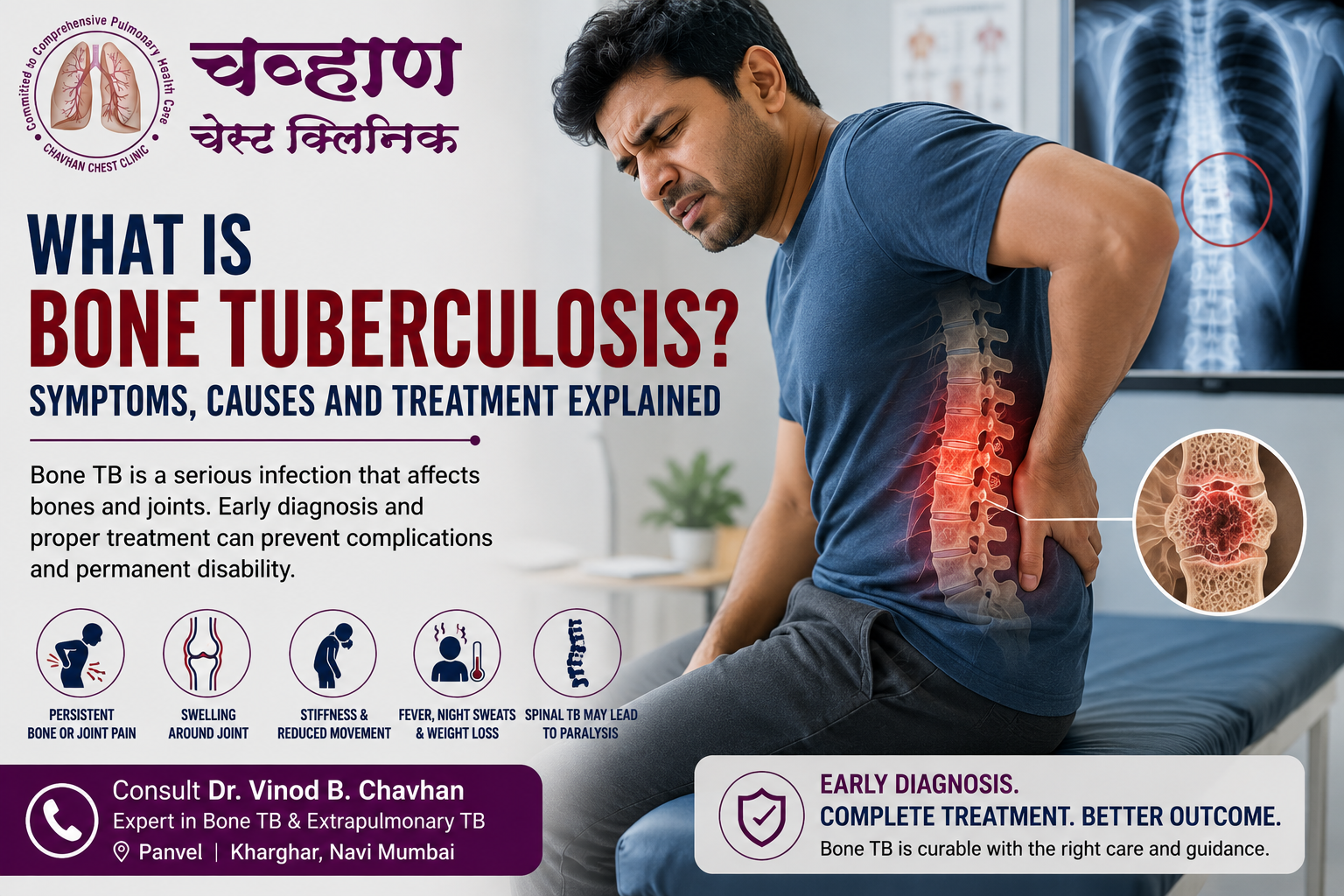
What Is Bone Tuberculosis? Symptoms, Causes and Treatment Explained
Most people in India hear the word tuberculosis and immediately think of coughing, chest infections, and lungs. Very few are aware that the same bacteria responsible for lung TB can travel silently through the bloodstream and attack bones and joints.
Bone tuberculosis, also called bone TB or skeletal tuberculosis, is more common than most people realise. India carries nearly 27 percent of the global TB burden, and around 10 percent of all extrapulmonary tuberculosis cases involve the skeletal system. That adds up to tens of thousands of patients every year in India alone.
The problem is that bone tuberculosis symptoms look like many other conditions. A dull ache in the back gets labelled as a slipped disc. A swollen knee is treated as arthritis. Months pass before anyone suspects TB. By the time the right diagnosis is made, significant bone damage has already occurred. In spinal tuberculosis, that delay can lead to bone TB and paralysis, a complication that could have been prevented.
This blog answers the questions patients and families ask most: what bone TB actually is, which bones it affects, what bone tuberculosis symptoms to watch for, how bone TB diagnosis works, how long bone tuberculosis treatment takes, whether bone TB is contagious, and whether it can come back.
If you are in Navi Mumbai and need a proper evaluation, Dr. Vinod B. Chavhan at Chavhan Chest Clinic in Panvel and Kharghar offers expert consultation for bone TB and all forms of extrapulmonary TB India patients commonly present with.
What Is Bone Tuberculosis?
Bone tuberculosis is a bacterial infection of the bones and joints caused by Mycobacterium tuberculosis, the same organism responsible for lung TB. It is one of the most serious forms of extrapulmonary tuberculosis, which simply means TB that has spread outside the lungs to other parts of the body.
The infection reaches the bones through the bloodstream. In most patients, there is a primary focus of TB in the lungs or lymph nodes first. That primary infection is sometimes so mild that the person never noticed any chest symptoms. The bacteria then circulate through the blood and settle in areas of bone that have a rich blood supply, particularly in the spine, the hip joint, and the knee joint.
Once inside bone tissue, the bacteria cause slow, progressive destruction. This is not a sudden, explosive infection. Bone TB develops quietly over weeks and months. The bone is gradually eroded as the body tries to fight the infection, forming pockets of dead tissue and pus called cold abscesses. By the time symptoms become noticeable, the damage is often already significant.
Spinal tuberculosis, also known as Pott’s disease after the British surgeon Percivall Pott who first described it in the 18th century, is the most common form of skeletal tuberculosis. It accounts for nearly half of all bone TB cases worldwide. The thoracic spine, which is the upper and middle back, is the most frequently affected site. The lumbar spine and cervical spine can also be involved.
Which Bones Are Most Commonly Affected?
TB affecting bones and joints does not follow a random pattern. Certain sites are affected far more often than others:
The Spine (Pott’s Disease and Spinal TB)
Spinal tuberculosis is the single most common form of bone TB. The bacteria typically destroy two or more adjacent vertebrae along with the disc between them. As the vertebral bodies collapse, the spine can develop a sharp forward bend called kyphosis or gibbus deformity. This deformity, if severe, compresses the spinal cord and causes the neurological complications that make bone TB and paralysis such a serious concern.
The Hip Joint
The hip is the second most common site. Patients typically present with pain in the groin, thigh or buttock, a limp, and gradually worsening restriction in hip movement. Many of these patients are initially treated for arthritis before TB is suspected.
The Knee Joint
TB affecting bones and joints of the knee causes swelling, warmth, stiffness and pain. The knee remains swollen despite rest, and standard arthritis medications bring no lasting relief. This is an important clue.
Other Sites
The ankle, wrist, elbow, shoulder, ribs, and long bones such as the femur can all be involved. Bone TB in children more commonly affects the long bones and larger joints, and children may present with a limp, refusal to walk, or a swollen joint that keeps recurring.
Bone Tuberculosis Symptoms
Bone tuberculosis symptoms come on gradually. Patients often describe months of worsening discomfort before they seek medical attention. Here is what to watch for:
Persistent Bone or Joint Pain
TB bone pain is a deep, constant ache that does not go away with rest. It tends to worsen at night, which is a detail that distinguishes it from ordinary mechanical pain caused by overuse or injury. Standard painkillers provide only temporary and incomplete relief. If bone or joint pain has been present for more than four to six weeks without improvement, TB needs to be considered.
Swelling Around the Joint
The affected joint becomes swollen and feels boggy or doughy to the touch. Unlike the firm swelling of a fracture or the hot, tense swelling of acute septic arthritis, bone TB often causes a cool or mildly warm swelling filled with infected fluid and inflammatory tissue.
Stiffness and Reduced Movement
As the infection damages the joint surfaces and surrounding tissue, movement becomes increasingly limited. A patient with hip bone TB develops a limp. Knee TB makes it difficult to fully bend or straighten the leg. Spinal TB symptoms include a stiff, rigid back with muscle spasm on both sides of the spine.
Fever, Night Sweats and Weight Loss
These are the constitutional symptoms that point toward an active infection. A low-grade fever in the evenings, soaking night sweats, loss of appetite and gradual weight loss are features of active TB at any site. Many patients with bone TB symptoms in adults have been living with these symptoms for months and attribute them to stress, overwork or a prolonged viral illness.
Cold Abscess
In advanced bone TB, the body walls off the infection and forms a cold abscess, a pocket of pus that does not produce the intense heat, redness and tenderness of a typical abscess. In spinal tuberculosis, a cold abscess can track downward along muscle sheaths and appear as a painless lump in the groin or thigh, far from the spine itself. This presentation confuses many patients and doctors initially.
Spinal TB Neurological Warning Signs
This is the most urgent group of symptoms in all of bone TB. When collapsing vertebrae press on the spinal cord, patients develop:
- Weakness or heaviness in the legs
- Numbness or tingling from the level of the lesion downward
- Difficulty walking or sudden inability to walk
- Loss of bladder control or bowel control
Any one of these symptoms in a patient with back pain and fever is an emergency. Bone TB and paralysis can become permanent if the spinal cord is compressed for too long without treatment. An MRI of the spine should be arranged urgently, not after a few more weeks of physiotherapy.
Bone TB Causes and Risk Factors
How Does Bone TB Develop?
Bone TB causes begin with Mycobacterium tuberculosis establishing itself in the lungs or lymph nodes. From there, the bacteria enter the bloodstream and travel to bones. The infection may remain dormant in the bone for years before becoming active, especially when the immune system is weakened.
Who Is at Higher Risk?
Bone TB does not affect everyone equally. The following groups face a higher risk:
- People with HIV or AIDS, whose immune systems cannot contain the bacteria
- Patients on long-term steroids or immunosuppressive medications used for conditions like rheumatoid arthritis or after organ transplants
- Children under five years of age, whose immunity is still developing
- Elderly individuals with age-related decline in immune function
- People who had pulmonary TB in the past and did not complete their full course of treatment
- Individuals who are malnourished or have chronic illnesses like diabetes or kidney disease
- Those living in overcrowded areas with poor ventilation and high TB exposure
- People with a close family contact who has active TB
How Is Bone TB Diagnosed?
Bone TB diagnosis requires a combination of clinical assessment, imaging and laboratory confirmation. The challenge is that early bone TB can look almost normal on standard X-rays, and the symptoms overlap heavily with arthritis, disc disease and other infections.
MRI Scan
MRI is the gold standard imaging investigation for bone TB. It detects early bone marrow inflammation, shows the extent of soft tissue and abscess involvement, and most critically, reveals whether the spinal cord is being compressed in cases of spinal tuberculosis. No other test gives as complete a picture in the early stages.
CT Scan
A CT scan shows bone destruction in finer detail than an MRI. It is particularly useful for assessing the degree of vertebral collapse in Pott’s disease and for planning surgery when it is needed.
X-Ray
X-rays are the starting point in most hospitals. In moderate or advanced bone TB, they can show bone erosion, loss of joint space, or vertebral collapse. In early disease, they may appear near-normal, which is one reason delays in diagnosis are so common.
Bone Biopsy for TB
A bone biopsy for TB is the definitive test. A small sample of bone or joint tissue is taken using a needle or through a minor surgical procedure and sent for three types of analysis: histopathology (looking for the characteristic granulomas of TB under the microscope), mycobacterial culture (growing the bacteria to confirm the species), and PCR testing.
PCR Testing (GeneXpert)
The GeneXpert MTB/RIF test detects Mycobacterium tuberculosis DNA from biopsy tissue within a few hours and simultaneously checks whether the bacteria are resistant to rifampicin, one of the main TB drugs. This has significantly reduced the time needed to confirm bone TB diagnosis in India.
Blood Tests
ESR and CRP are raised in active bone TB and are used to monitor response to treatment over time. The Mantoux skin test and the IGRA blood test (interferon-gamma release assay) support the diagnosis but cannot confirm it alone.
Bone Tuberculosis Treatment
Bone tuberculosis treatment is medical in the vast majority of cases. The infection is treated with drugs, not surgery. Surgery plays a limited but important role in specific situations.
Anti-Tubercular Therapy (ATT)
Anti-tubercular therapy is the backbone of how to treat bone TB. The standard regimen uses four drugs in the initial phase: Isoniazid, Rifampicin, Pyrazinamide and Ethambutol. After two months of four-drug therapy, the continuation phase uses two drugs, Isoniazid and Rifampicin, for the remaining duration of treatment.
Bone TB Treatment Duration
Bone TB treatment duration is longer than for pulmonary TB because bones heal more slowly than lung tissue. The Index TB Guidelines of India recommend 12 months of anti-tubercular therapy for musculoskeletal TB, which can be extended to 18 months depending on the site, the severity of disease and how well the patient responds to treatment. Your treating physician will review clinical symptoms, ESR levels and imaging at regular intervals to make this decision.
The single most important rule of bone TB cure is completing the full course without stopping early. Patients who stop ATT once they feel better are the main reason drug-resistant TB develops. Can bone TB come back? Yes, it can, particularly in patients who stop treatment early or who are immunocompromised. Completing the full course dramatically reduces the chance of relapse.
Rest and Immobilisation
During the active phase of spinal tuberculosis treatment, a spinal brace is often prescribed to support the spine, reduce pain and protect the vertebrae from further collapse while healing begins. Once the infection is controlled and ESR levels normalise, gentle physiotherapy starts to restore strength and movement.
Bone TB Without Surgery
Bone TB without surgery is achievable in the large majority of patients. Most people with skeletal tuberculosis recover fully with ATT alone, combined with rest and monitoring. Surgery is reserved for a specific minority of patients.
When Surgery Is Needed
Surgery becomes necessary when:
- The spinal cord is being compressed and neurological symptoms are worsening despite ATT
- A large abscess needs to be drained because it is not resolving on its own
- The spine is severely unstable due to vertebral collapse
- The diagnosis remains uncertain and a biopsy is required to confirm bone TB
Surgery in bone TB does not replace ATT. It addresses structural problems, drains pus and decompresses the spinal cord. ATT continues after surgery for the full prescribed duration.
Common Questions Patients Ask
Is Bone TB Contagious?
Is bone TB contagious? This is one of the first things patients and families want to know. The direct answer is no. Bone TB does not spread through the air the way pulmonary TB does. You cannot catch bone TB by sitting next to a patient, sharing a room or touching them. The bacteria stay inside the bone and joint. The only remote risk is direct contact with pus from an open sinus, which is rare and preventable with basic hygiene.
That said, if a bone TB patient also has undetected active pulmonary TB, the lung component can still be infectious. A chest physician will always check for this.
Can Bone TB Come Back?
Can bone TB come back? It can, but it is not common in patients who complete their full course of ATT. Relapse is more likely in people who stopped treatment early, who are HIV positive, who are severely malnourished or who develop drug-resistant TB. Regular follow-up with ESR monitoring for at least a year after completing treatment is important to catch any recurrence early.
Does Bone TB Always Need Surgery?
No. The majority of bone TB patients are treated successfully without surgery. Bone TB without surgery is the norm, not the exception. The decision for surgery depends entirely on whether there is spinal cord compression, severe instability or a large abscess that does not respond to ATT.
Can Children Get Bone TB?
Yes. Bone TB in children is a real and underdiagnosed problem in India. Children may present with a limp, reluctance to walk, a swollen joint, or back pain. Parents sometimes attribute these symptoms to a fall or a growth-related complaint. Any child with joint swelling or bone pain lasting more than three to four weeks without a clear cause deserves proper investigation.
Why Early Diagnosis Changes Everything
The biggest problem with bone TB is not that it is difficult to treat. The drugs work well. The problem is that diagnosis comes too late in most cases.
Every week of active infection allows more bone to be destroyed. In the spine, that progressive destruction eventually reaches the spinal cord. The difference between a patient who walks out after completing anti-tubercular therapy and a patient left with permanent leg weakness is almost always the speed of diagnosis.
Extrapulmonary TB India patients face a particular challenge because most general practitioners are trained to think of TB primarily as a chest condition. A chest physician for bone TB Navi Mumbai who manages both pulmonary and extrapulmonary TB regularly is in the best position to recognise the condition, arrange the right investigations and start treatment without unnecessary delay.
Consult a Bone TB Specialist in Navi Mumbai
If you or someone in your family has unexplained bone pain lasting more than a month, a joint that keeps swelling without a clear reason, back pain with fever and weight loss, or leg weakness with back stiffness, do not manage it indefinitely with painkillers.
Dr. Vinod B. Chavhan at Chavhan Chest Clinic is a chest physician with extensive experience in tuberculosis, including spinal tuberculosis, Pott’s disease, and all forms of extrapulmonary tuberculosis. As a trusted bone TB specialist Navi Mumbai patients rely on, Dr. Chavhan provides complete clinical evaluation, guides the right diagnostic workup, initiates and monitors anti-tubercular therapy, and coordinates with specialist surgeons whenever needed.
Clinics are available at two locations for the convenience of patients across Navi Mumbai:
Chavhan Chest Clinic, Panvel and Chavhan Chest Clinic, Kharghar
Whether you are looking for a bone TB doctor Panvel, a bone TB doctor Kharghar, or need tuberculosis treatment Navi Mumbai for a newly diagnosed or previously treated case, Dr. Chavhan is available for consultation.
Early diagnosis. Complete treatment. Full recovery.
